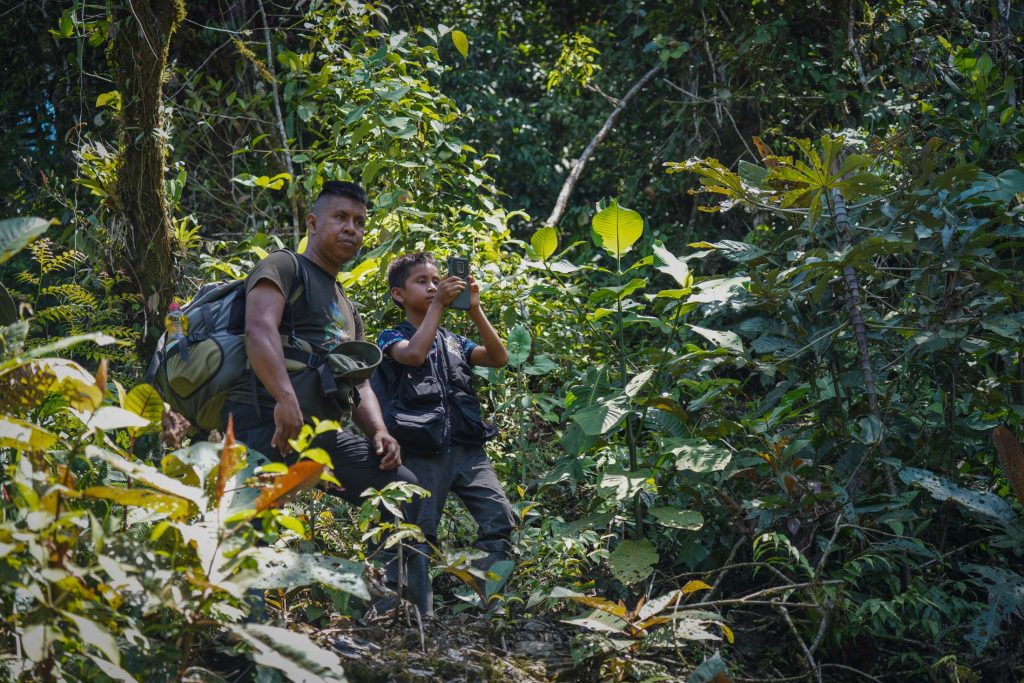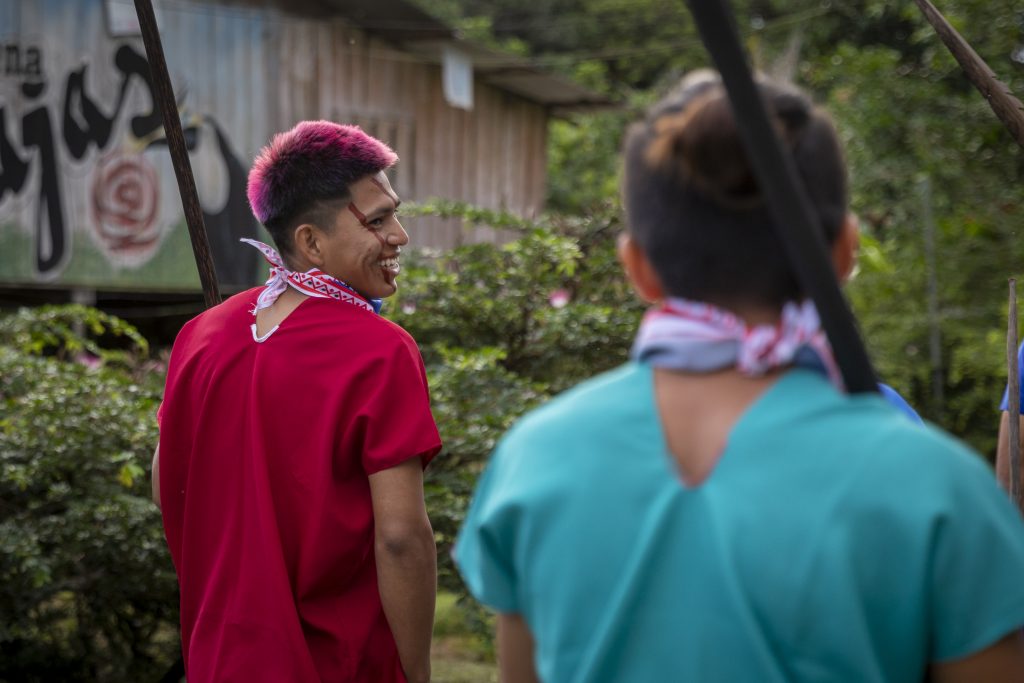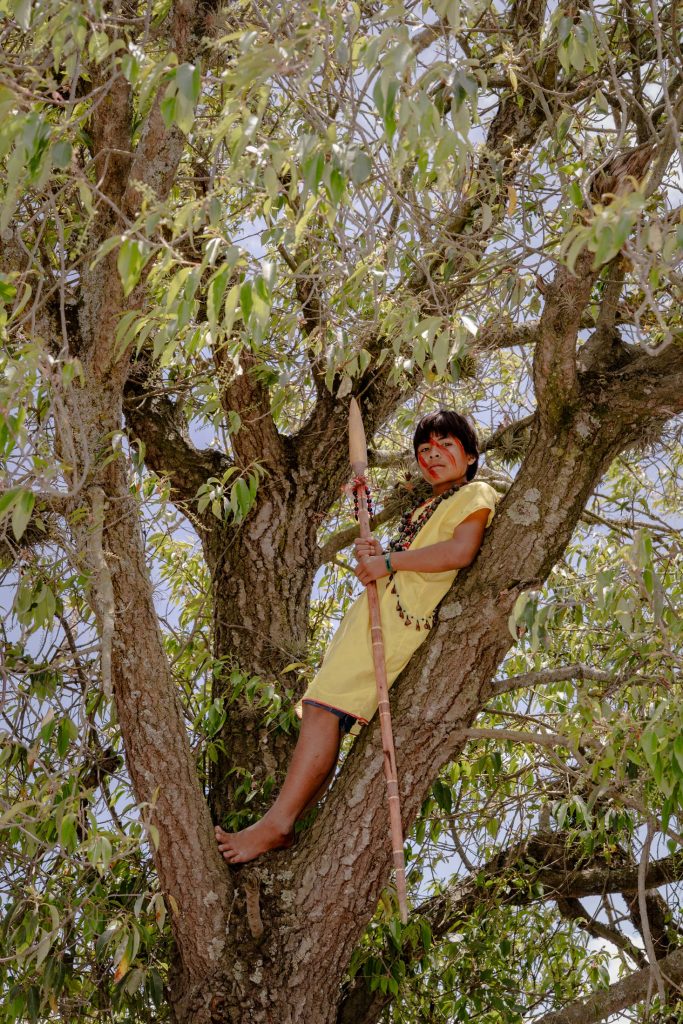
For almost ten years, Amazon Frontlines and the Ceibo Alliance have had the privilege of working alongside Indigenous Guards across multiple nations and communities in the Ecuadorian Amazon. The Kuirasundekhu of the A’i Cofán of Sinangoe, the Wajosar’a of the Siekopai Nation, the Andema kañasûndekhû of Cofán Bermejo, and the Nee Wanonani Meñebai of the Waorani of Pastaza are just a few of the many Indigenous Guards that have played an active role in our collective work.
Throughout this journey, we have witnessed and accompanied the profoundly human and community-driven process behind these Guards: the learning, the growth, and the strengthening of collective organization as Indigenous nations confront a growing wave of industrial interest and pressures seeking to exploit their ancestral territories.
In a moment when regressive narratives hold power over information, seeking to stigmatize Indigenous Guards and criminalize defenders of individual, collective, environmental, human and territorial rights, we want to recall five truths about Indigenous Guards that will allow you to understand their work and continue learning from those who defend the Amazon and everyday life.
1. It is an ancestral, community-based body for the defense of life and ancestral land.
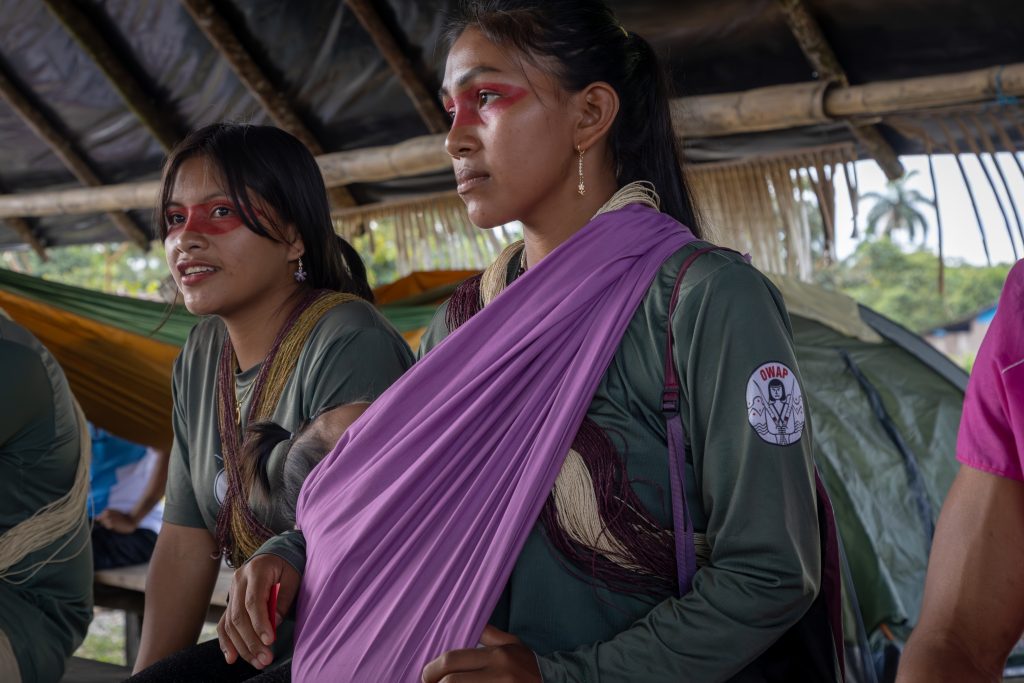
Indigenous Guards are a community-led, ancestral, and legitimate body born from the living memory and organization of Indigenous peoples. Their principles are rooted in a profound connection to cultural values, cosmovision, spirituality, and the territories they have safeguarded and sustained through centuries of resistance. Their work protects their communities, collective rights, territory, culture, and life itself.
Indigenous Guards defend their territory, a territory they feel and listen to. They walk and monitor their territory using technology and, above all, the ancestral knowledge passed down by their elders. They are a fundamental part of community governance: they emerge from collective mandates, participate in assemblies, remain connected to the wisdom of their elders, and strengthen the social fabric that holds their nationalities together.
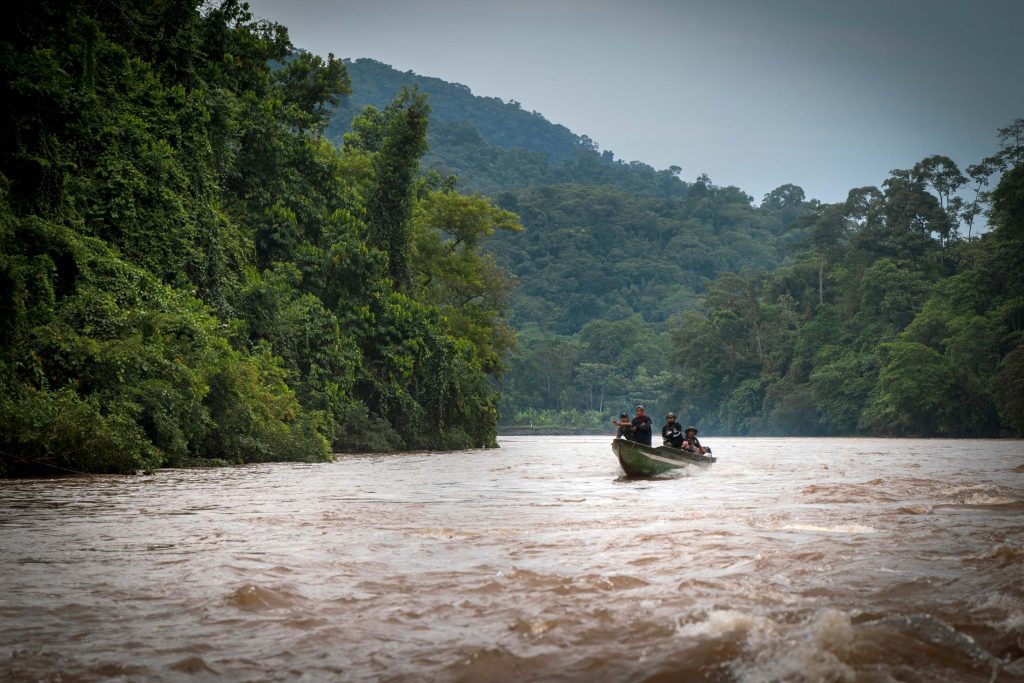
Photo: Karen Toro
2. There is no single Indigenous Guard: each community has its own, based on its needs and its own forms of organization.
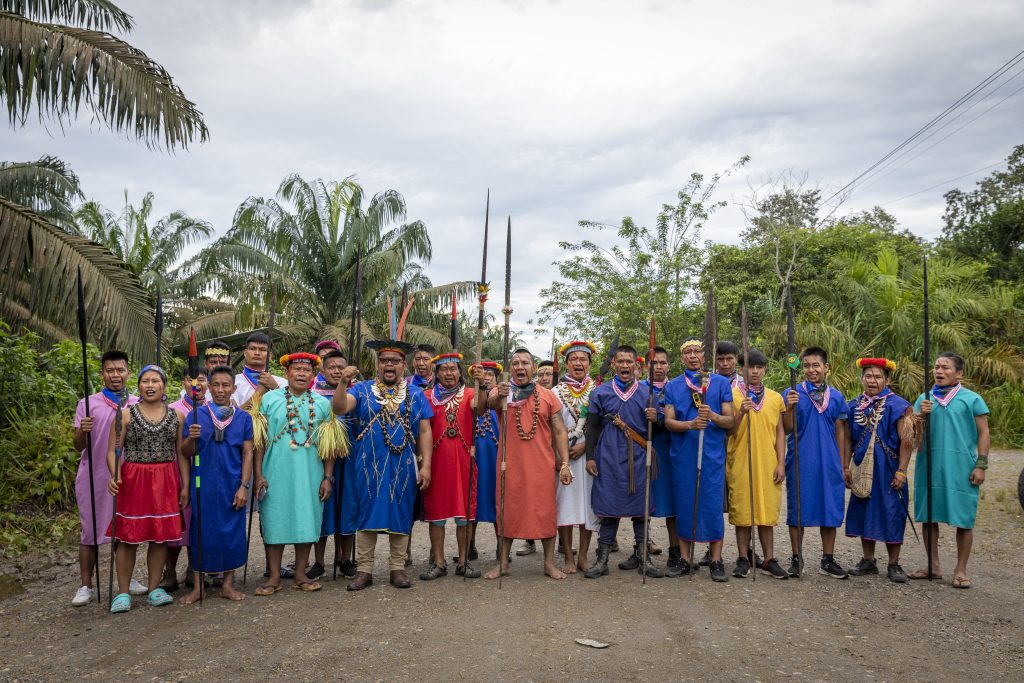
Each Indigenous Guard reflects the history, cosmovision, and organization of its people; this is why they have different names and organizational structures. Although there is no single Indigenous Guard, they all share a common source of collective authority: community assemblies and the spirituality that guides their work. Their shared mission and principle is to protect life and territory through their right to self-determination.
Within this framework, their practices are defined: spiritual guidance and ancestral medicine, decisions made in assembly, the mandates that orient their work, and the symbols and attire that identify them. Each Indigenous Guard is, at its essence, a living expression of the history and political organization of its own indigenous community or nationality.
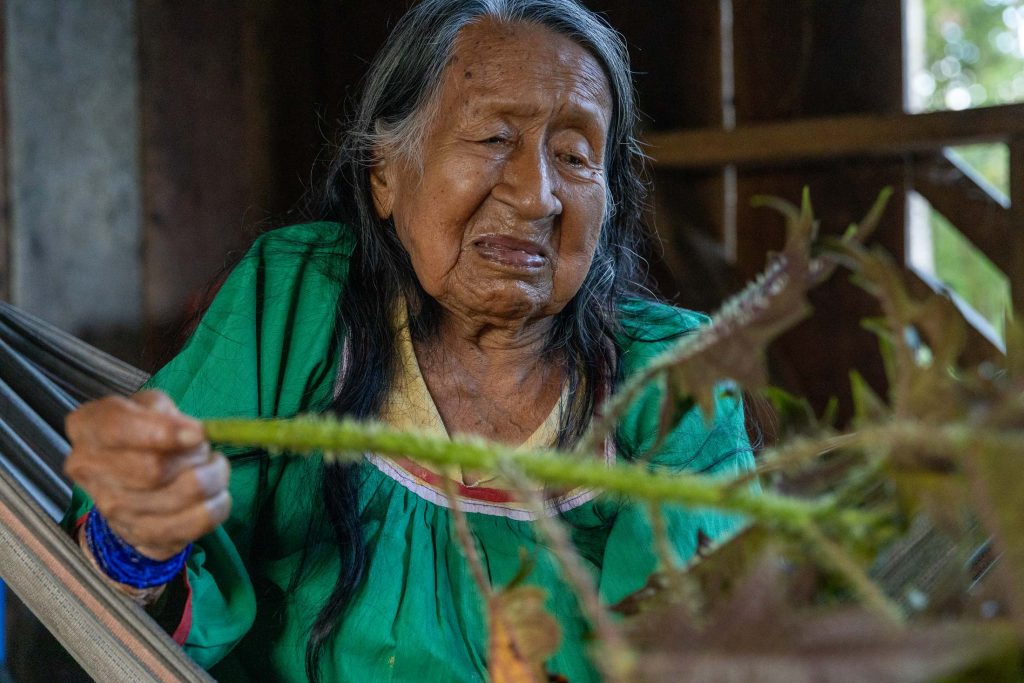
Photo: Morelia Mendúa / Ceibo Alliance
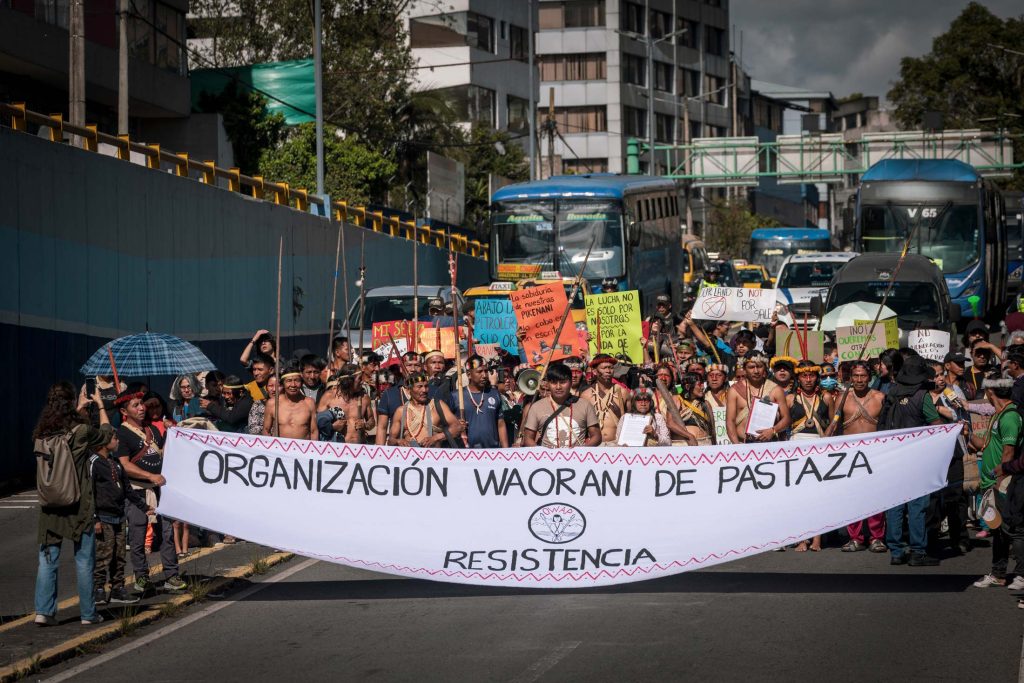
3. Their existence is upheld by the right to self-determination of Indigenous peoples
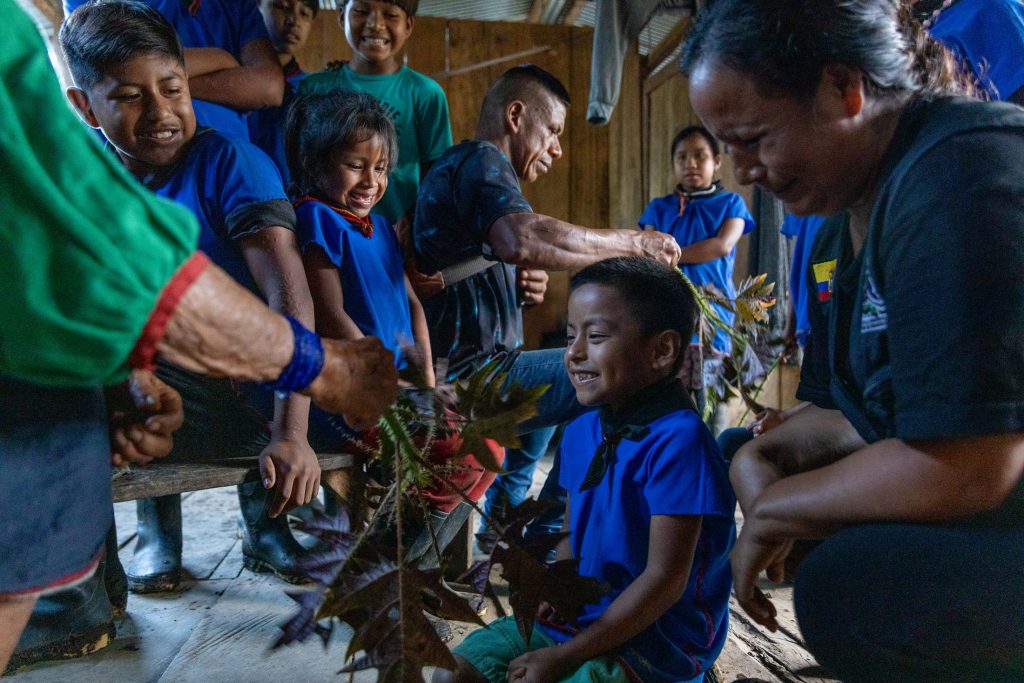
Indigenous Guards are a recognized mechanism with legal backing in both the Ecuadorian Constitution and jurisprudence, as well as in international human rights instruments. Its existence is legally recognized as part of the essential component of self-determination, self-governance, and the inherent legal systems of Indigenous peoples.
Likewise, they are recognized as a collective subject in the defense of human rights and the rights of nature. Their role is to protect life, territory, and identity, always guided by the community’s mandate.
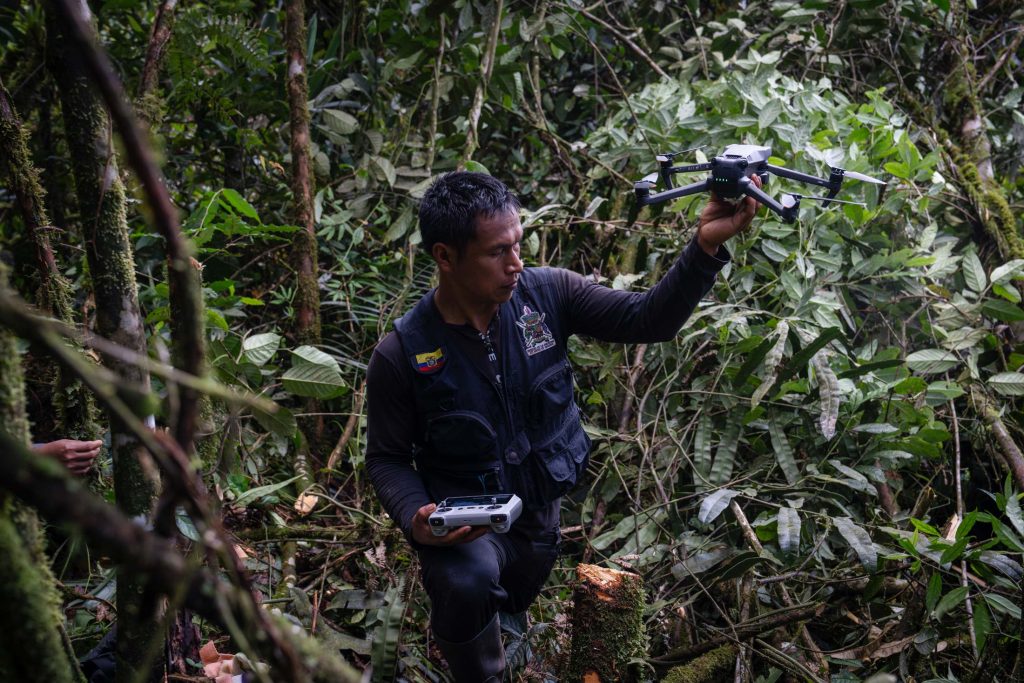
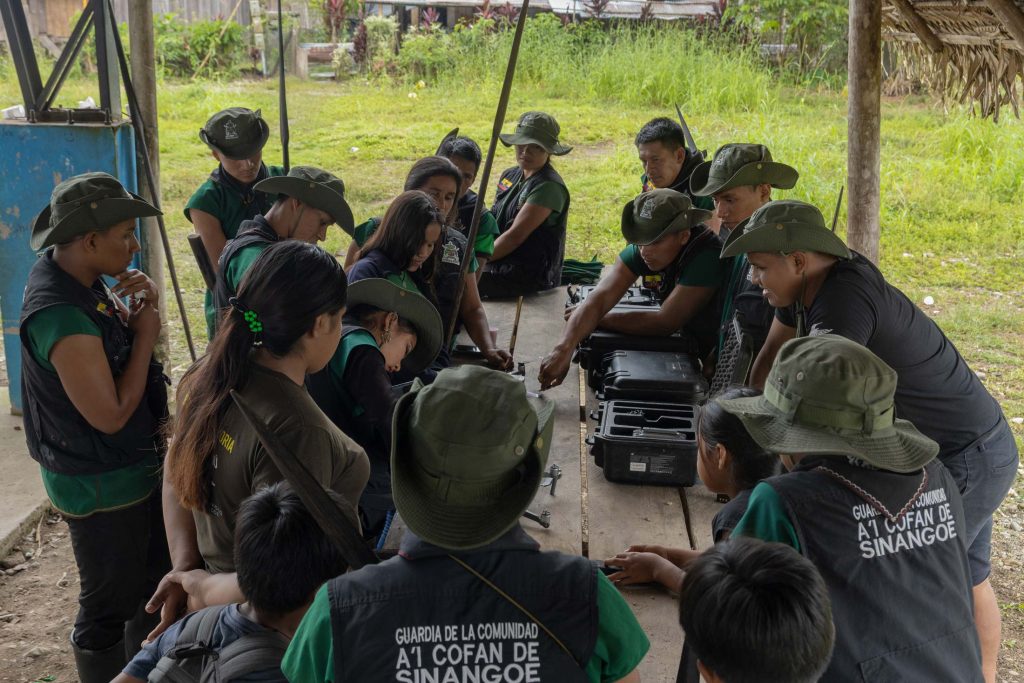
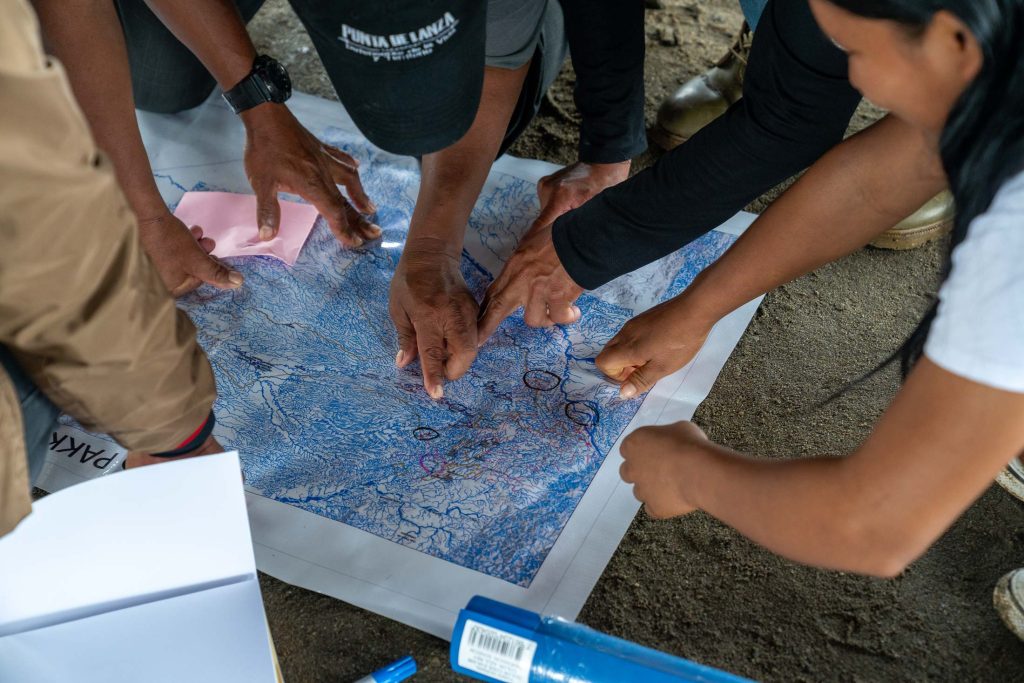
Photo: Daris Payaguaje / Alianza Ceibo
4. The collective partnership of Amazon Frontlines, the Ceibo Alliance, and the Regional Indigenous Council of Cauca (CRIC) of Colombia
Since 2018, Amazon Frontlines and the Ceibo Alliance have been steadily accompanying the strengthening of Indigenous Guards in the Northern Amazon, through work built alongside Indigenous organizations and guided by their own ways of thinking, doing, and governing. This process emerged from the communities’ own needs in the face of increasing pressures and threats to their ancestral territories, and it has taken shape through workshops, community dialogues, and inter-community gatherings that have enabled the sharing of experiences in territorial protection.
This path of collaboration opened the door to partnerships with the Regional Indigenous Council of Cauca (CRIC) in Colombia and with organizational structures of the Indigenous movement in Ecuador, giving rise to the first National Gathering of the Indigenous Guard in 2022. Within this framework, Amazon Frontlines and the Ceibo Alliance helped form a multiethnic and interdisciplinary accompaniment team dedicated to training in rights, territorial monitoring, identity, and governance.
The accompaniment is carried out in a horizontal and itinerant way: sharing knowledge, strengthening capacities, exchanging skills and understanding around rights and territorial and cultural defense, systematizing customary norms, and supporting holistic territorial protection practices. This work responds to mandates issued by the communities themselves and is coordinated with their governing councils.
Our role in accompanying the Indigenous Guards is grounded in respect for their autonomy and in walking alongside their peoples, children, youth, elders, and authorities. Our commitment is to be present, supporting them to strengthen, through transparency and collective work, their right to defend life and their ancestral lands.
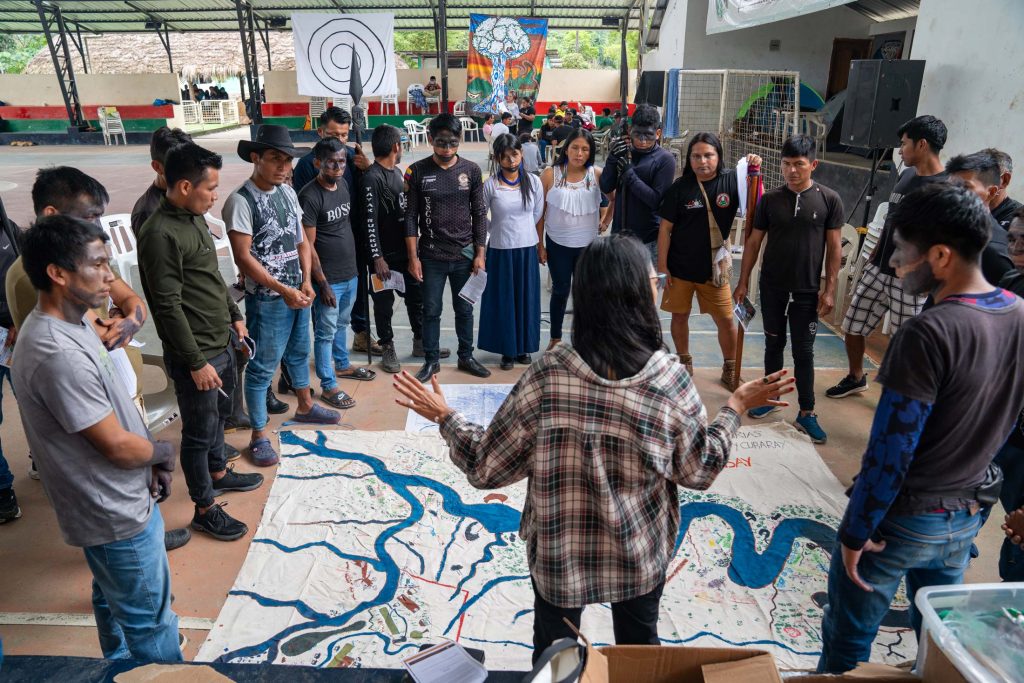
5. The fundamental role of Indigenous Guards today
Indigenous Guards are an indispensable mechanism in the face of the current threats facing territories and communities. The expansion of colonization and extractive industries—mining, oil, logging, and agro-industry—and the structural absence of the State in rural and border areas pose significant risks to the integrity and physical and cultural survival of indigenous peoples. Violence associated with territorial disputes, the presence of armed actors, drug trafficking, stigmatization, criminalization, and violence against social leaders and human rights defenders, as well as the consequences of the climate, economic, and social crises, make community protection and defense essential.
Indigenous Guards monitor, protect, and defend territories, documenting and preventing threats that the state system is unable to manage effectively. Their existence and continuity are a legitimate expression of self-determination and the exercise of collective rights.
Guaranteeing the exercise of Indigenous Guards is part of Ecuador’s recognition as a plurinational and intercultural state and means protecting life itself from external pressures and structural violence in the region. It also constitutes an act of resistance and historical, cultural, and political memory in the face of a monocultural, colonial, and capitalist system that erodes the identity and life of indigenous peoples.