“We want clean water and a dignified life, our wellbeing.”
This was the demand voiced by more than 100 Kichwa Indigenous communities affected by oil spills in the Ecuadorian Amazon, as they addressed a Judge from the Francisco de Orellana province during the intercultural dialogue held on 28 August 2025 in the city of El Coca. It was a defining moment in the long road that still lies ahead to achieve true intercultural and reparative justice in Ecuador, a country that, in its Constitution, defines itself as intercultural and plurinational, yet in practice sustains a hegemonic system unable to understand, respect, or engage with other forms of governance and justice.
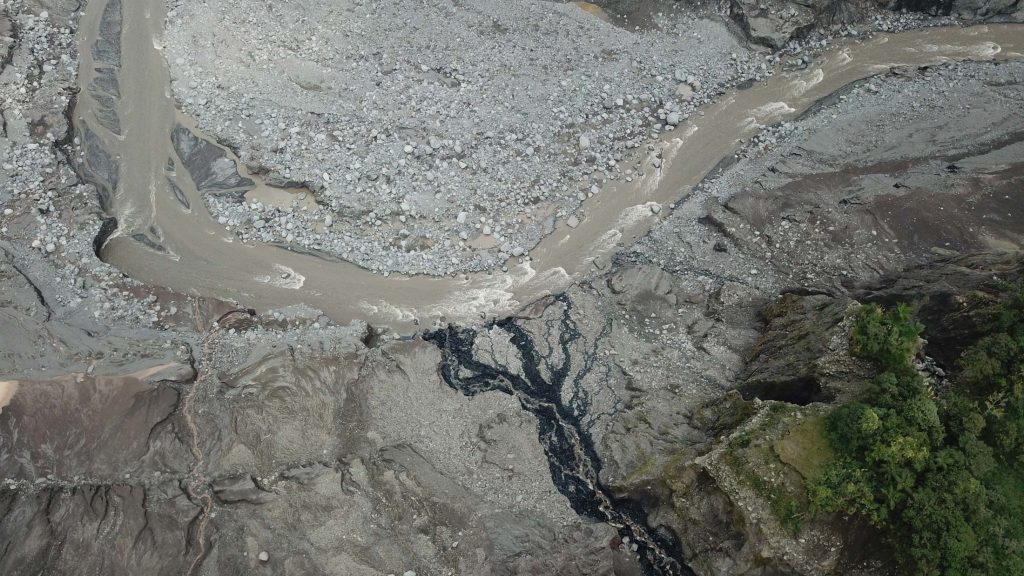
In April 2020, around 120,000 people, including more than 27,000 Indigenous people, were affected when over 15,000 barrels of oil spilt as a result of the rupture of two pipelines along the banks of the Coca and Napo Rivers. More than one hundred Kichwa riverine communities have, little by little, witnessed the unravelling of their collective identity, their community relations, and the many ways they relate to their territory and the river. This spill was followed by four more over the course of the next five years, deepening the destruction of nature and further deteriorating the living conditions of the affected population.
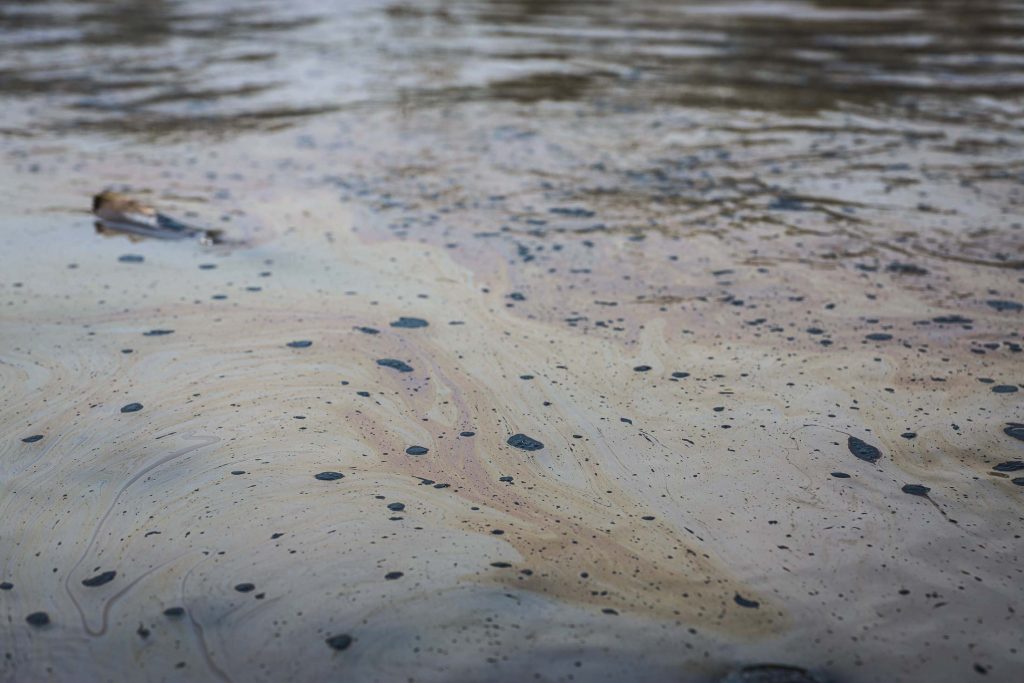
In 2020, the communities, organized under the Federation of Kichwa Communities Unión de Nativos de la Amazonía Ecuatoriana (FCUNAE), turned to the state justice system to demand their rights to assistance and reparation, but these rights were denied. In 2024, the country’s highest court, the Constitutional Court, ordered the case reopened and transferred to the Multicompetent Court of Francisco de Orellana, where Judge Clemente Paz mandated an intercultural dialogue in August, ahead of the trial hearing scheduled for this upcoming 8 December.
What Defines an Intercultural Dialogue?
In Ecuador, constitutionally recognized as an intercultural and plurinational State, an intercultural dialogue is not merely an option; it is a legal obligation. This obligation is grounded in the collective rights of Indigenous peoples (Article 57), which include identity, self-determination, and their own systems of justice, as well as in the civic duty to “promote unity and equality in diversity and in intercultural relations” (Article 83, paragraph 10).
The Constitutional Court has affirmed the mandatory nature of this dialogue, stating that it must take place “among equals” and must incorporate the ancestral institutions of Indigenous peoples. This includes recognizing their voice, their self-identification, their decision-making power over their future, and their own claims and obligations (Ruling No. 0008-09-SAN-CC).
Moreover, authorities—both state and Indigenous—are obligated to initiate an intercultural dialogue in any judicial process where rights may be at risk, with the purpose of “interpreting norms and understanding facts and behaviors” (Ruling No. 112-14-JH/21, para. 35).
This dialogue is not a mere procedural formality, but an essential process for “interpreting norms and understanding facts and behaviors” from the perspective of those with whom the state engages. As scholar Catherine Walsh, whose work focuses on plurinationality and interculturality, emphasizes, it is about recognizing other ways of organizing social and political life. Intercultural dialogue is intrinsically linked to plurinationality, a defining feature of the Ecuadorian State that acknowledges and respects other systems of justice. Each Indigenous people or nationality has its own juridical institutionality, which is not always written or codified. Instead, it emerges from deep and genuine listening to elders and ancestral authorities, as well as from essential community practices, such as singing and weaving, to name a couple, that serve as channels for expressing their own law. These practices reflect each person’s lived experience and project the collective identity.
The Winding Road Toward Intercultural Justice
Reaching the so-called “intercultural dialogue” held in August 2025 required navigating winding, difficult paths, and even then, the event itself failed to fully grasp the true depth and meaning of intercultural dialogue. From the outset, such a dialogue between equals cannot take place when the date, time, and location are not agreed upon but instead imposed, as the judge from Francisco de Orellana did since the very first summons.
The judge set a date that did not allow sufficient time to convene and adequately prepare the plaintiff communities. He unilaterally determined that the event would take place at the FCUNAE headquarters in the city of Coca. The communities responded by requesting more time and presenting a protocol or guideline for how the intercultural dialogue should be conducted, explaining the need for it to be held within Kichwa territory.
The hearing was rescheduled for 30 June, but just a few days before that date, the judge suspended it for personal reasons and set a new one, this time overlapping with activities already planned by FCUNAE. This prompted a protest in front of the judicial complex of Francisco de Orellana, where community representatives, joined by leaders of other Indigenous nationalities, allied organizations, and their legal team, brought evidence of the oil contamination in the river caused by repeated spills in their territory, the most recent occurring on 16 June.
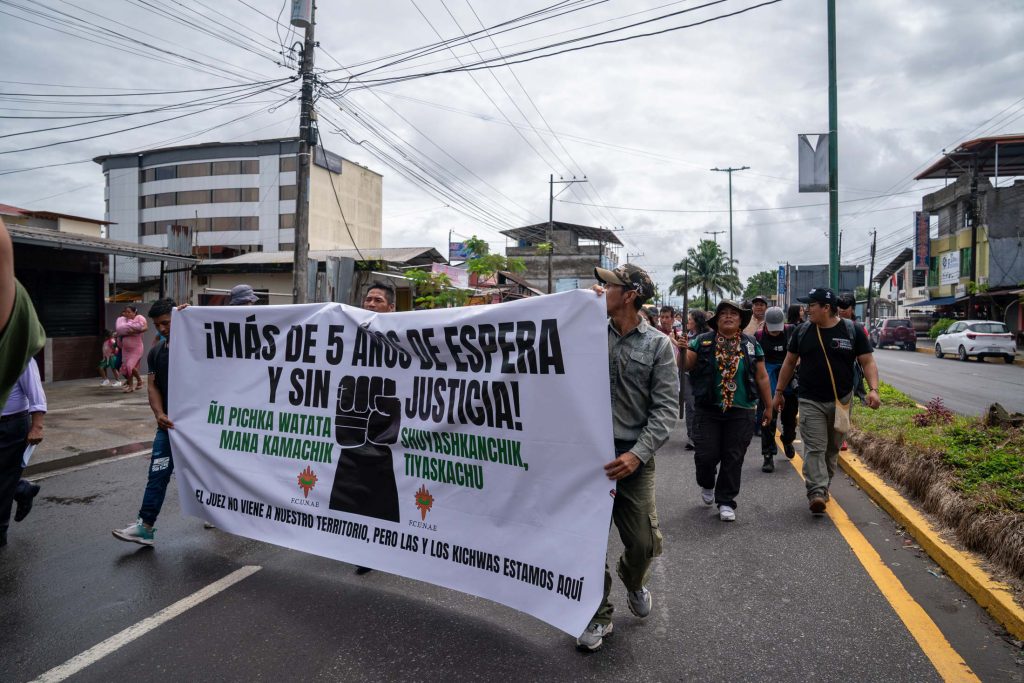
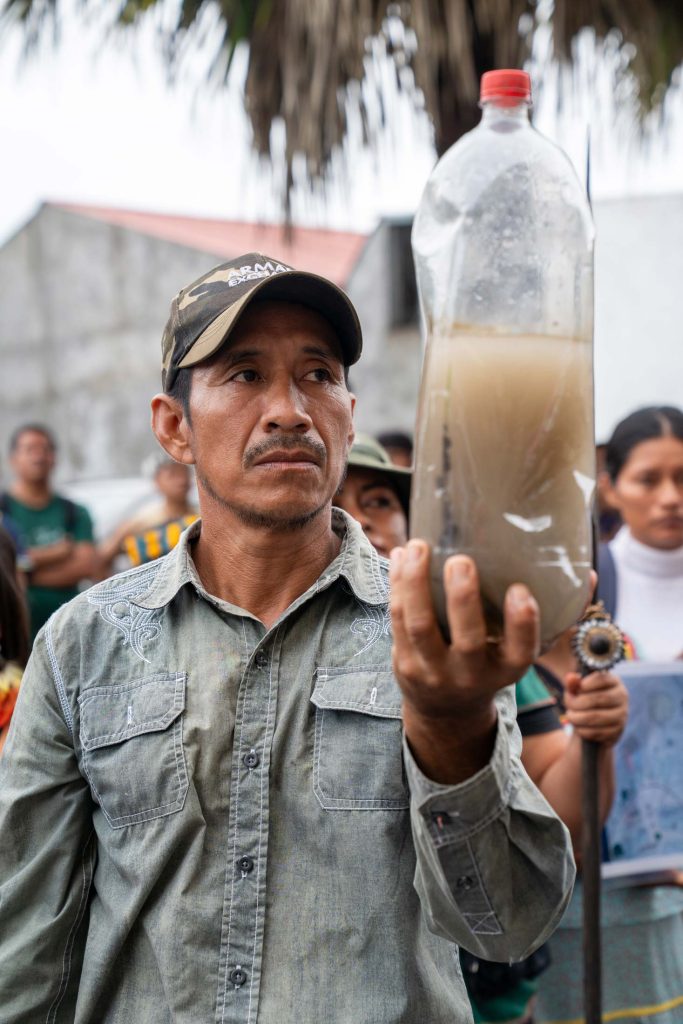
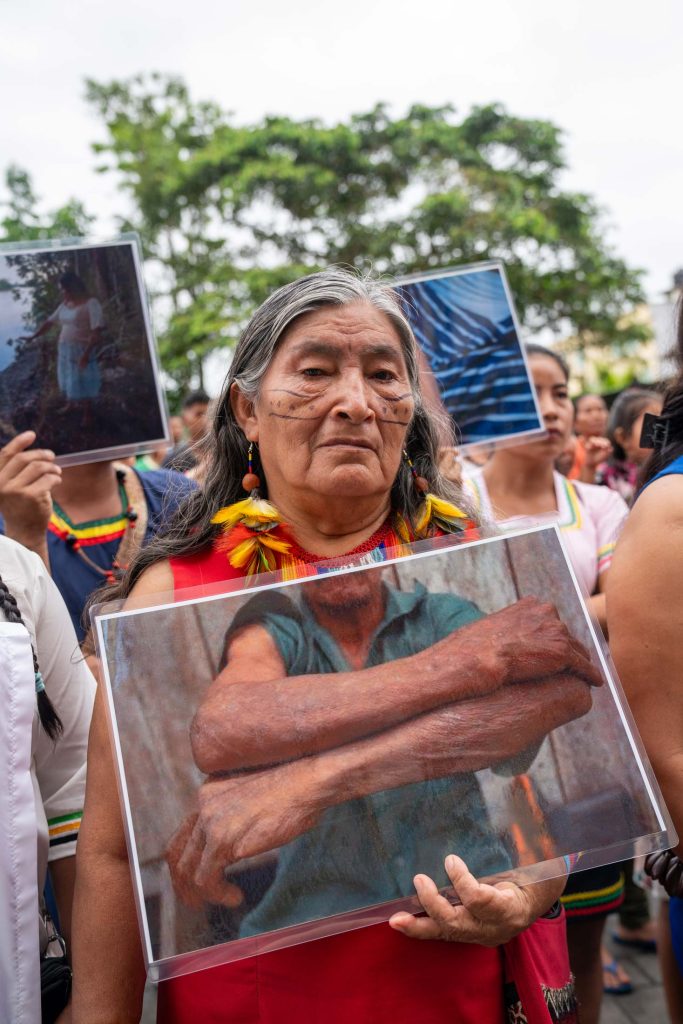
The final date was agreed upon during a meeting held on 15 July 2025 at the Judicial Council in the city of El Coca, with representatives from the Kichwa communities and FCUNAE in attendance. During the meeting, participants insisted on the need for the judge to conduct an on-site inspection of the communities so he could witness the pollution’s effects firsthand. The judge responded that he was already aware of the impacts of contamination because he had lived in the city of Coca for several years.
The judge reiterated his refusal to travel to Indigenous territory. He argued that his responsibilities and time constraints did not allow him to do so, and insisted that the dialogue should take place in the city, at the headquarters of FCUNAE’s political organization. The Judicial Council of Francisco de Orellana displays the slogan “Intercultural Justice” on its walls, yet it lacks the administrative and organizational structure needed to facilitate travel for the city’s only criminal judge, which significantly limits his ability to leave his workplace.
During the July 2025 meeting, the judge emphasized that his role would be merely that of an observer, acting as a kind of mediator between the communities and the State. The meeting left the impression that the judge did not understand what interculturality entails and continues to view the dialogue as a mere procedure or formality ordered by the Constitutional Court for the processing of this case.
The Dialogue
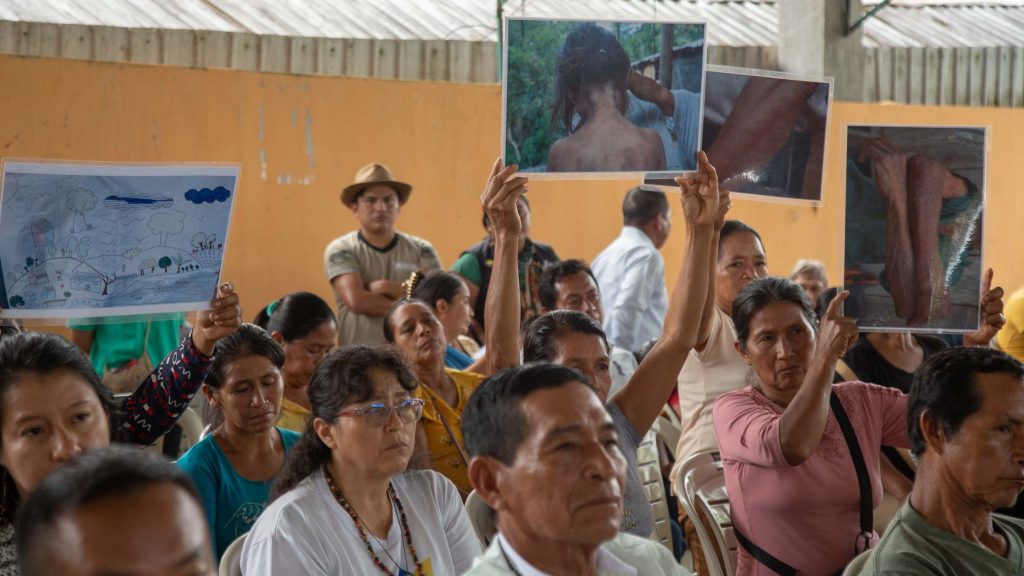
After overcoming each obstacle along the way, the intercultural dialogue between the Kichwa communes and communities and the judge finally took place on 28 August, at the FCUNAE headquarters. The Kichwa sought to bring a piece of the forest and their affected territory into the concrete space where the dialogue was held. They opened the gathering with a dance accompanied by drums and the pingullo flute. The Kichwa men and women then took the floor to express their frustration, pain, and indignation after five years of silence from the state justice system, without any response to improve their living conditions.
For three hours, the intercultural dialogue unfolded. They spoke about the deep relationship they hold with the river, and how that connection is now almost gone because the river is “sick and sad.” They spoke about Kichwa food systems and how they are being lost because their main crops no longer grow as they once did due to soil contamination: “Yuca and plantain don’t taste the same.” “Bocachico (a fish) almost never appears in the river now; we can’t feed ourselves with fish, and they expect us to change our diet to canned tuna and noodles,” they said.
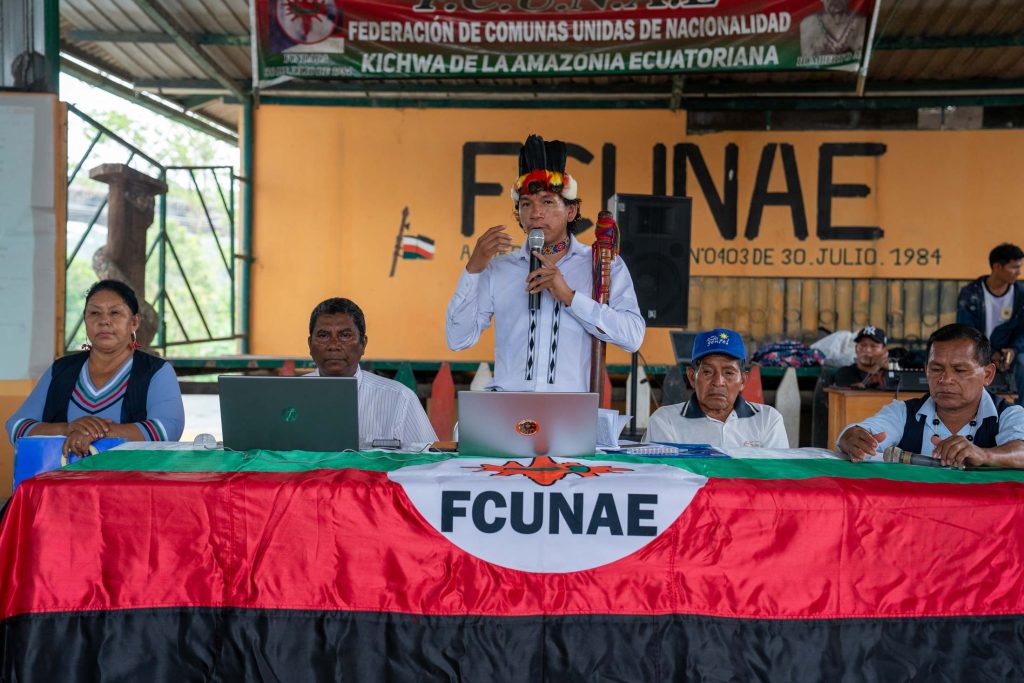
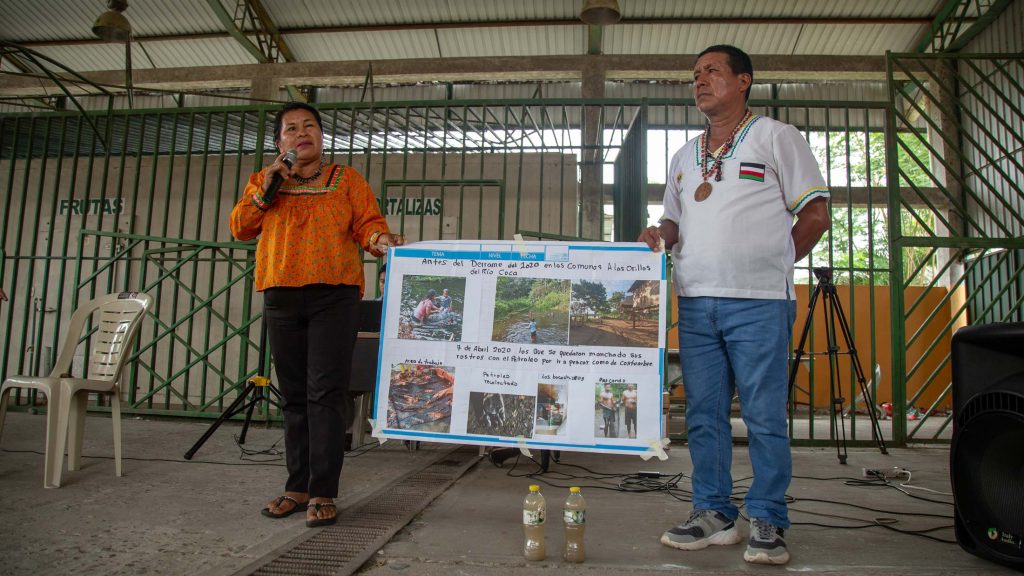
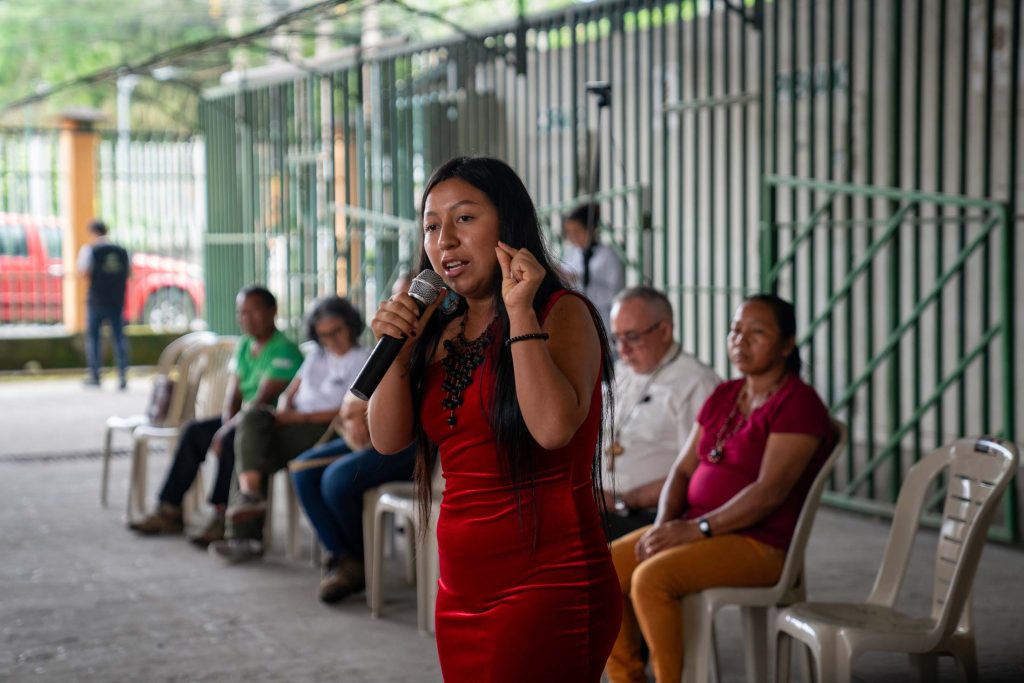
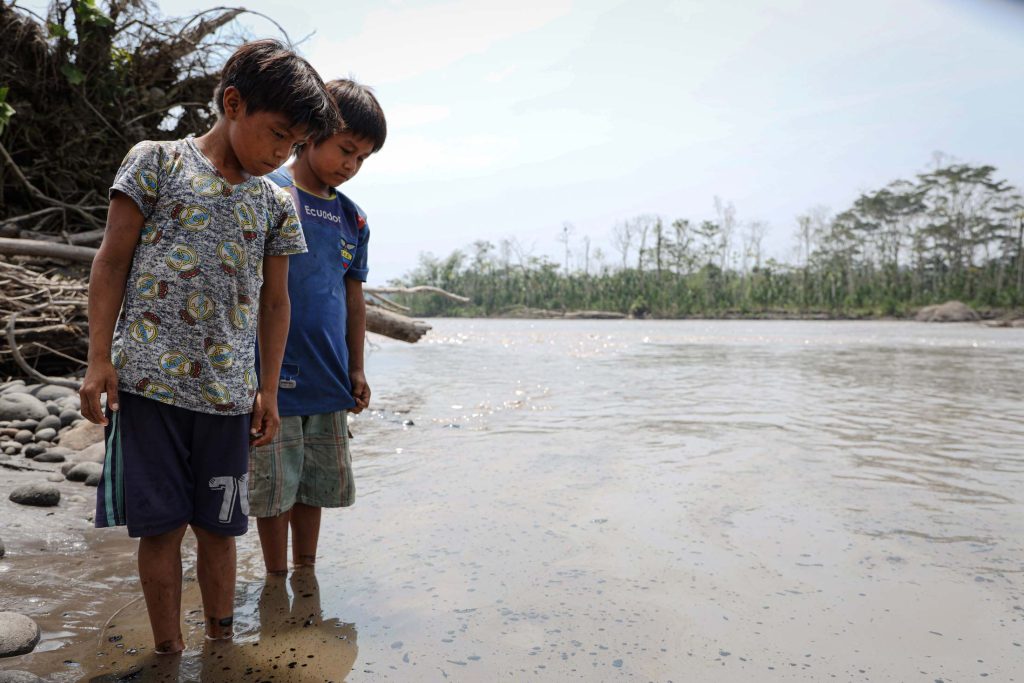
The Kichwa elders spoke about their harmonization practices, their form of restoring balance, which forms part of their own system of administering justice. These practices involve the use of medicinal plants such as nettle, guayusa, and chilli to heal the spirit, practices that are now being lost because community dynamics have also been disrupted. The impacts of the oil spills force people to relocate or prioritize survival activities, often far from their communities, causing them to abandon collective practices and communal life. For people, a fundamental way to repair and heal is to remove contamination from the river, because with constant spills, it cannot regenerate its cycles. Kichwa people, both children and adults, now fear the water.
At the end, the Kichwa authorities gave the floor to the judge, who thanked them for everything they had shared and clarified that this space served as a point of contact between authorities. He concluded by saying that he hopes all the information provided will be included in the case file so that it can be addressed during the hearing and lead to informed decisions.
The expected outcome of this dialogue is for the state judicial authority—as the party responsible for deciding the case—to fully understand how Indigenous nationalities and peoples conceive their fundamental rights. Only then can the judge examine the scope and implications of the harm in a way that seeks genuine intercultural knowledge and understanding.
How Does Intercultural Justice Push Through a Hegemonic Model?
Normative language, and everything that comes with it: procedures, institutions, and so on, has been built from specific forms of knowledge and from human relations shaped within spaces of power. These dynamics have produced exclusionary frameworks in which not everyone is recognized as part of the reference point for justice or truth. As a result, the actors who predominate within this system are legal professionals trained in law schools. This is what Peruvian sociologist and political theorist Aníbal Quijano calls the coloniality of power. Today, this coloniality remains present in many expressions, some explicit, others symbolic, because it is the legacy of the nation-state model and the societies formed around social classifications based on cultural identity.
Given this history, it is unsurprising that state authorities, or the state justice system itself, struggle to recognize the legitimacy of actors outside formal institutions or outside the logic of the state. It is difficult for them to understand that power can flow from another history, from other knowledge systems, from other ontologies. Against this backdrop, it is deeply troubling that the judge spoke of the dialogue as if it were a process of conciliation, as though fundamental and collective rights could be negotiated, or as if the structural harms experienced by an Indigenous people could be addressed through simple agreements. That is not acceptable, considering rights must be asserted and repaired—not negotiated.
An intercultural dialogue cannot be reduced to asking more than one hundred Kichwa communities affected by oil contamination to simply listen to State officials outline demagogic, paternalistic measures instead of fulfilling the State’s constitutional duty to respect and guarantee their rights. The judge is not merely a mediator. His role is to contribute to restoring power equilibrium and to ensure that the judicial process, after more than five years in which the communities have remained in a state of defenselessness, is guided by an intercultural approach.
An intercultural dialogue can truly become a dialogue between equals only when three principles are met: First, when Indigenous justice and State justice are viewed without hierarchy, without the assumption that one form of knowledge validates the other. Second, when there is a genuine possibility for generating collective knowledge. Third, when there is a reconfiguration of social power capable of confronting and overcoming existing historical and symbolic forms of violence.