Indigenous Education Is Shaping the Future of the Amazon

Learning from the land in order to protect it — and protecting it in order to continue living — this cycle lies at the heart of the community-led education created by three Indigenous nations of the Ecuadorian Amazon. More than a model of schooling, it is an act of resistance: a way to defend the rainforest and to sustain cultures that refuse to be erased.
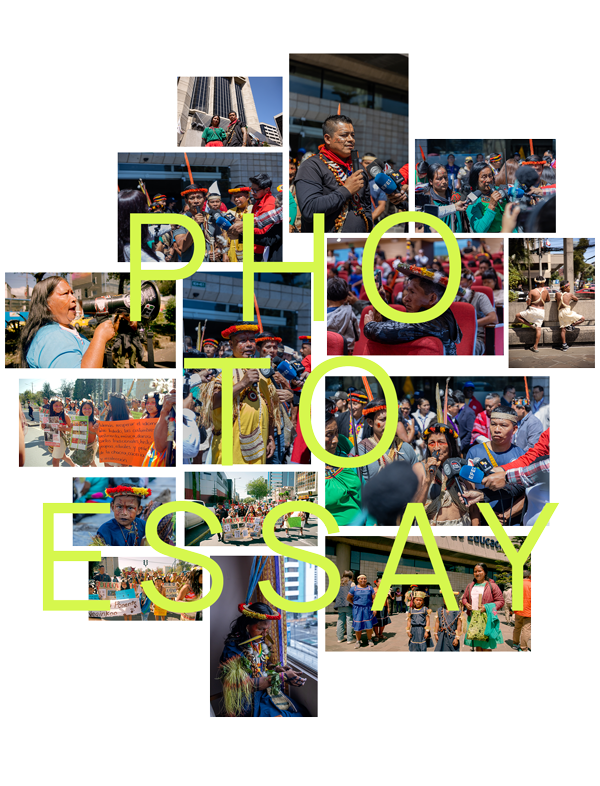
Surrounded by the cold facades of city buildings, children dressed in the vibrant clothing of their cultures — faces painted, crowns upon their heads — walked through the streets of Quito alongside their parents on January 20, 2026. They marched to call on Ecuador’s Ministry of Education, Sports, and Culture to formally recognize the Community Educational Projects (PEC), so these initiatives can continue to be carried out in their territories without obstruction.
In this photo essay, we invite you to walk alongside Waorani, A’i Cofán, and Siekopai children as they forge a path toward an education of their own — one that safeguards their future as Indigenous peoples and helps protect their territories in the Amazon Rainforest.
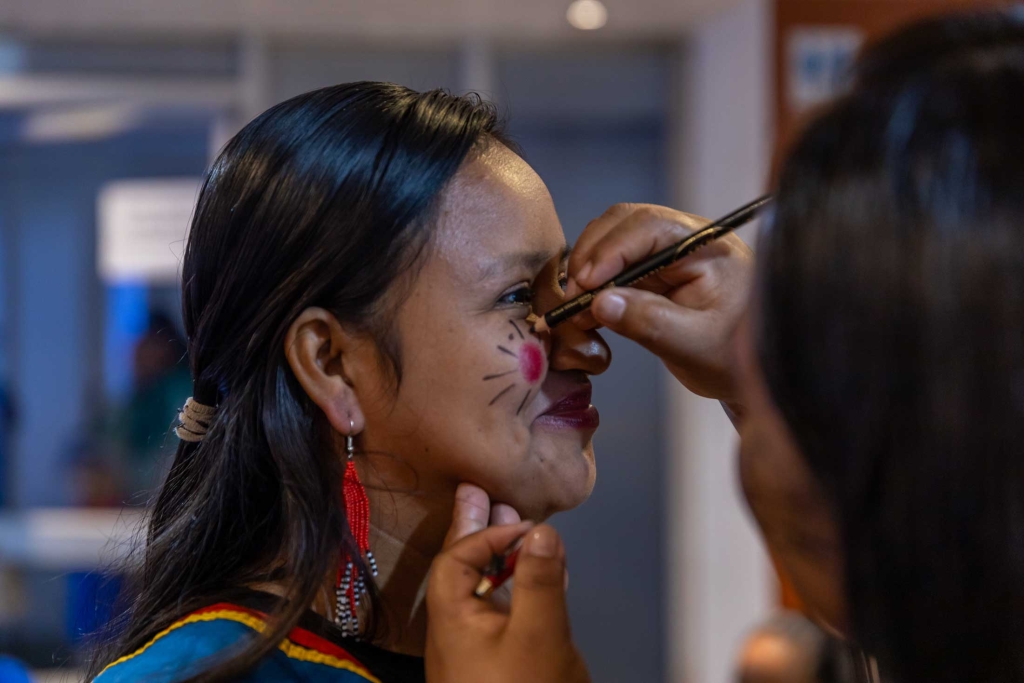
Preparation: Before heading to the gathering point, a young A’i Cofán woman has her face painted with traditional sun symbols.
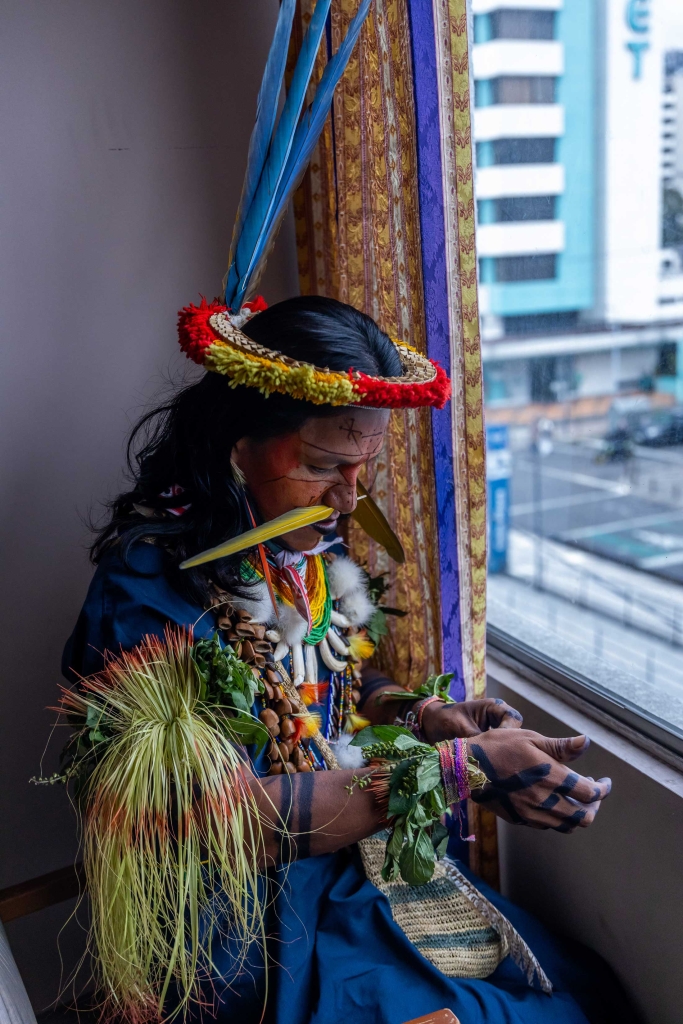
In his hotel room, Davixon Lucitante — a young Siekopai — adjusts one of his bracelets. He proudly wears the adornments of his culture: a crown, face paint, necklaces made of seeds and animal teeth, and the ma’ña tied around his arms. A feather through his nose marks his recognition as a knowledge holder. He is an heir to his grandfather’s wisdom, involved in the cultural revitalization of his people and learning the path of a future elder.
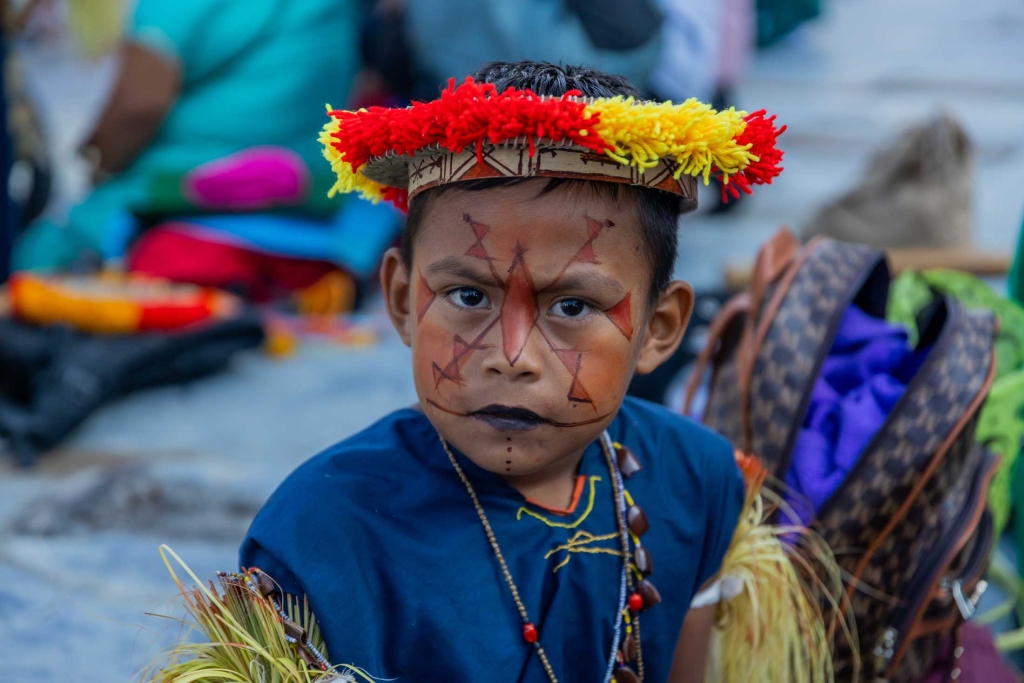
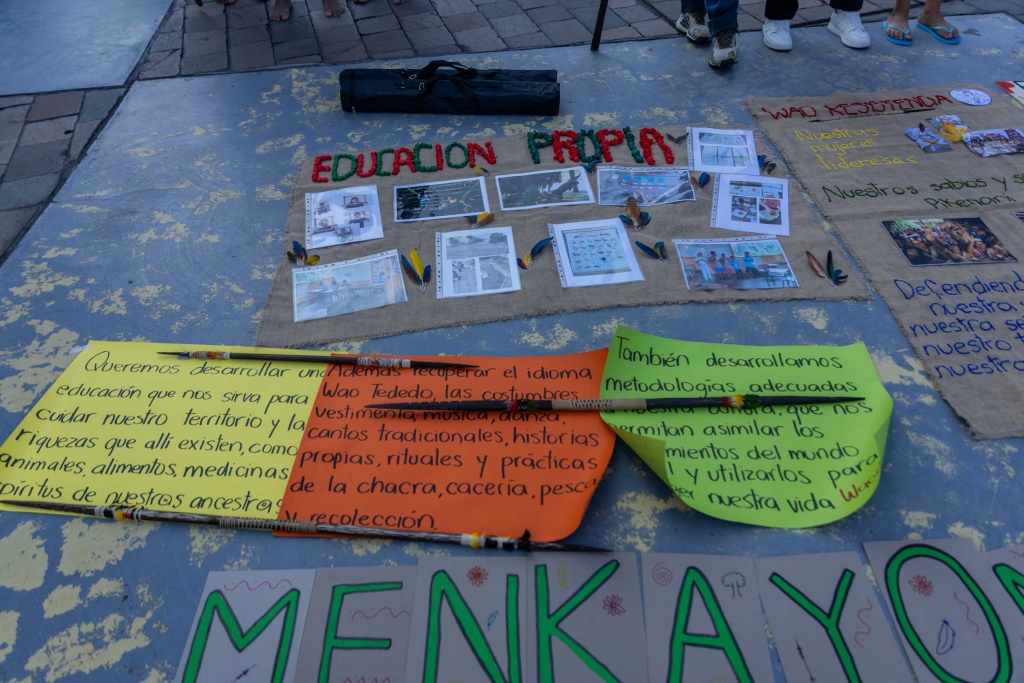
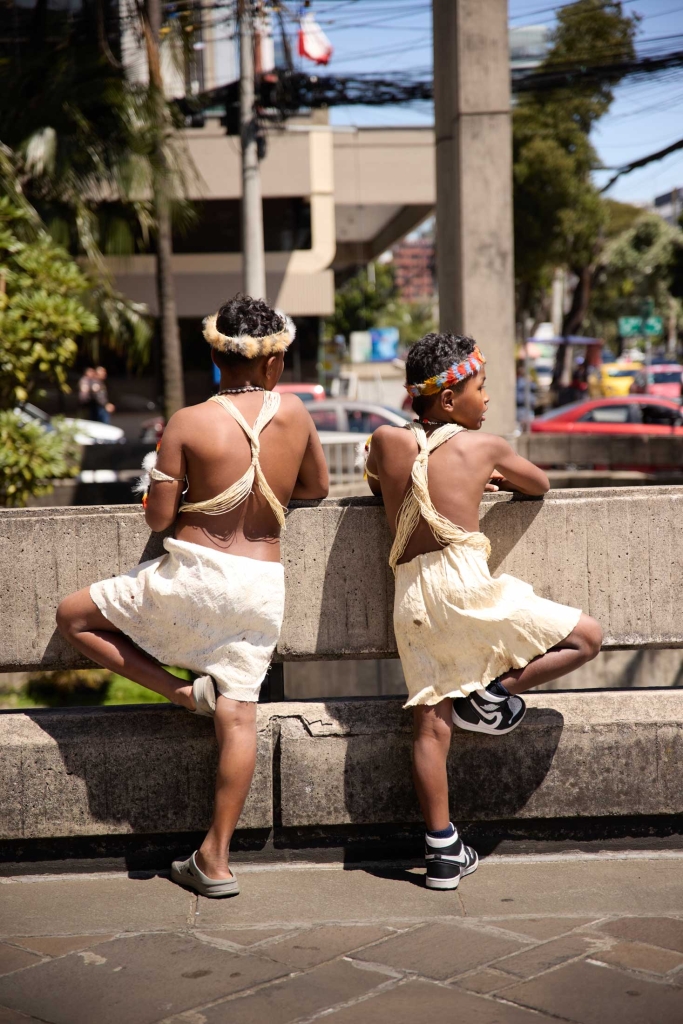
Boys and girls gather at the meeting point on the platform outside Ecuador’s Ministry of Agriculture, catching the first rays of the morning sun. They carry woven crafts, spears, and hand-painted signs bearing their messages and demands to Ecuador’s Ministry of Education.
On their way to the Ministry of Education, children from the three Indigenous nations walked hand in hand with their parents, grandparents, teachers, and community leaders to deliver their Community Educational Projects.
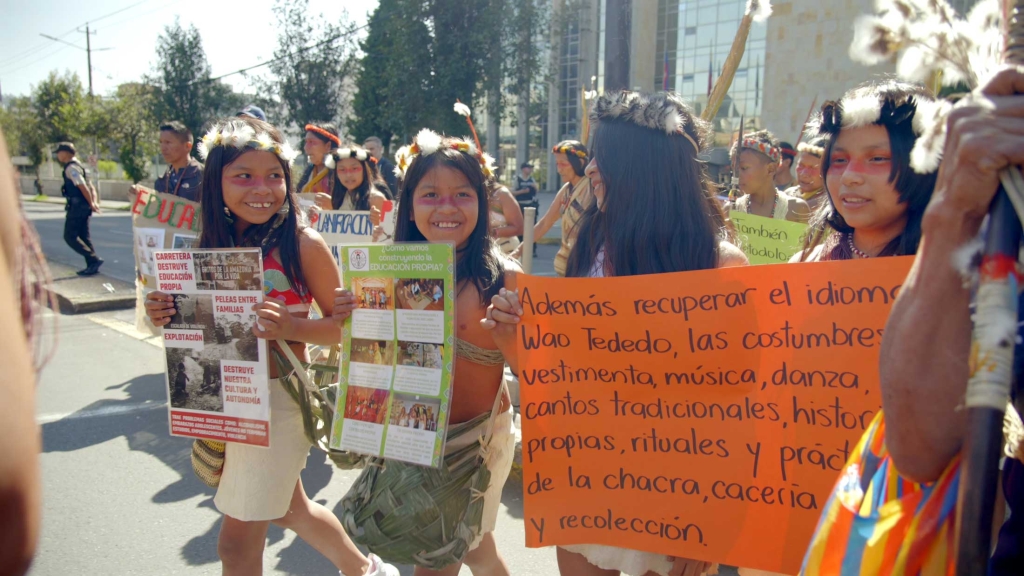
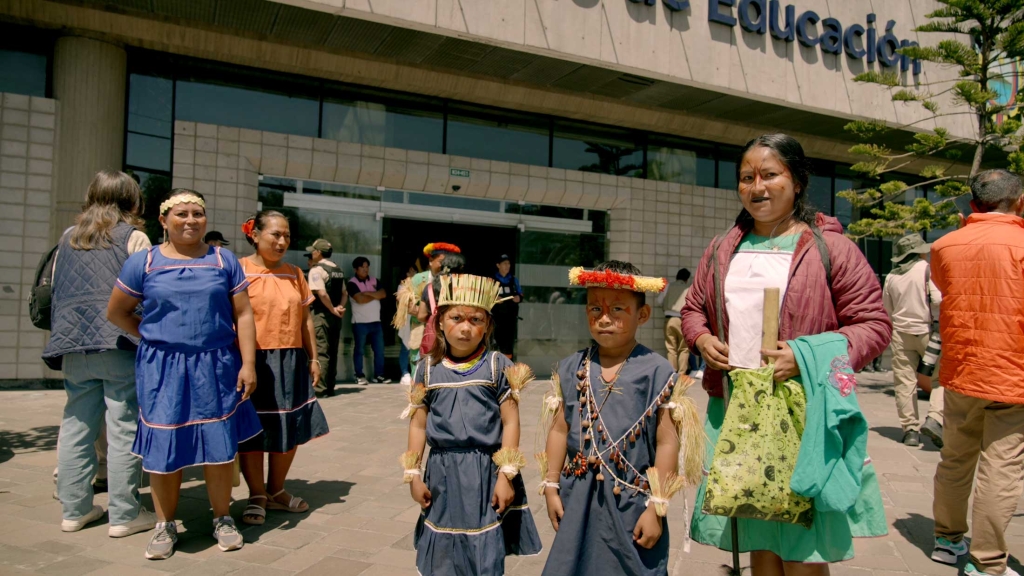
Since 2020, Waorani communities in the province of Pastaza, the Siekopai Nation, and the A’i Cofán community of Sinangoe have worked tirelessly to create an educational model rooted in their own worldview and the ancestral knowledge that has sustained and protected the rainforest for millennia. These initiatives do not reject Western knowledge; instead, they weave it in through innovative teaching methods that allow students to engage with these subjects through their own cultural practices.
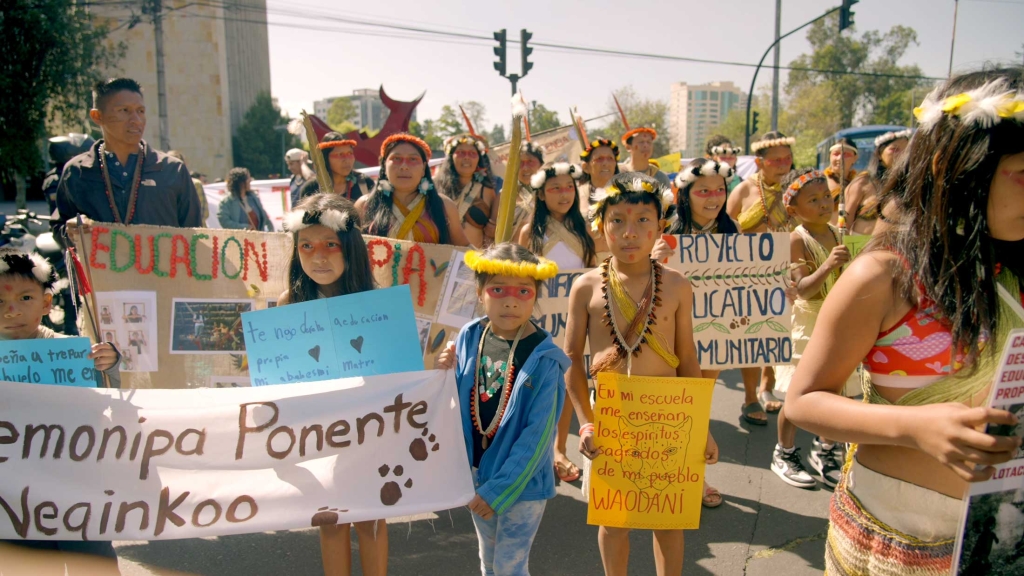
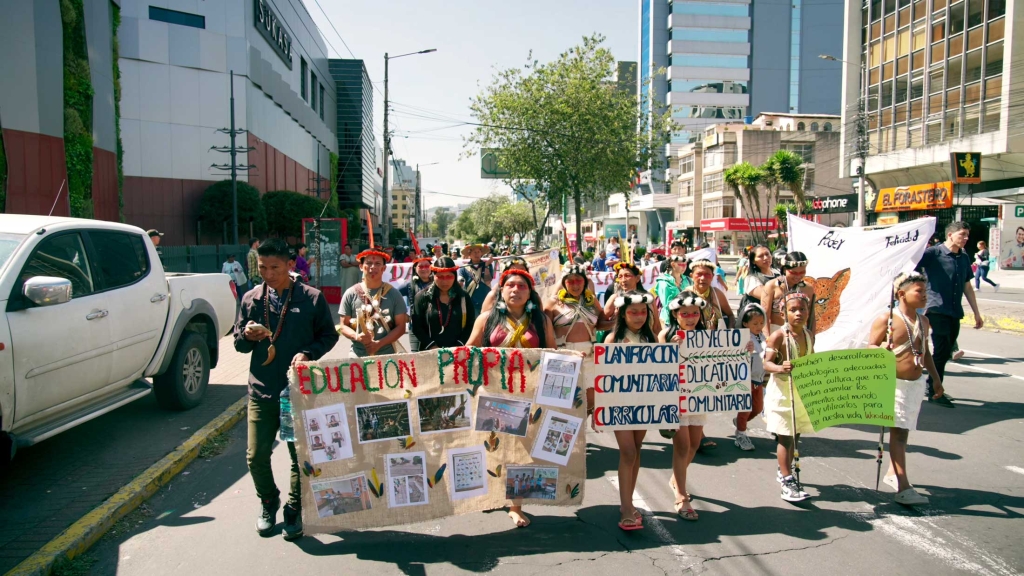
By 2025, the Community Educational Projects (PEC) were underway in nine schools, reaching 280 children and young people across the three territories. In Waorani territory alone, six community schools were built to support the new learning methods, serving 140 students between the ages of 3 and 19. At the same time, 29 Indigenous educators from the three nations — Waorani, A’i Cofán, and Siekopai — were trained to lead and sustain the projects.
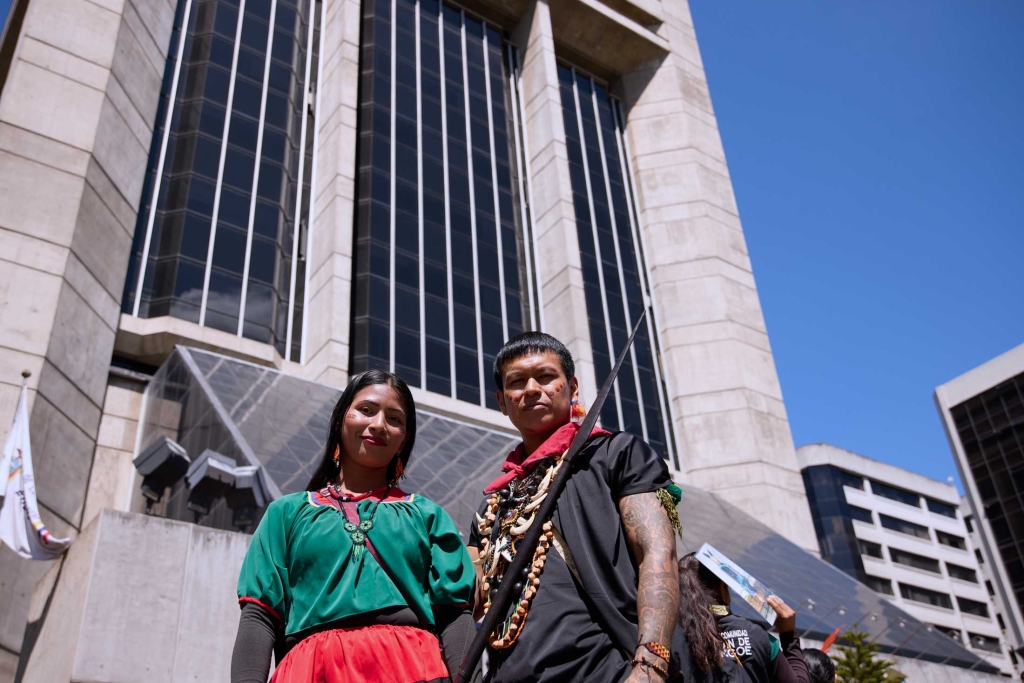
Outside Ecuador’s Ministry of Education in Quito, an A’i Cofán woman and man from Sinangoe — members of the Indigenous Guard — stand alongside the march. The Indigenous Guard participates in children’s education in Sinangoe, where learning includes how to defend their territory.
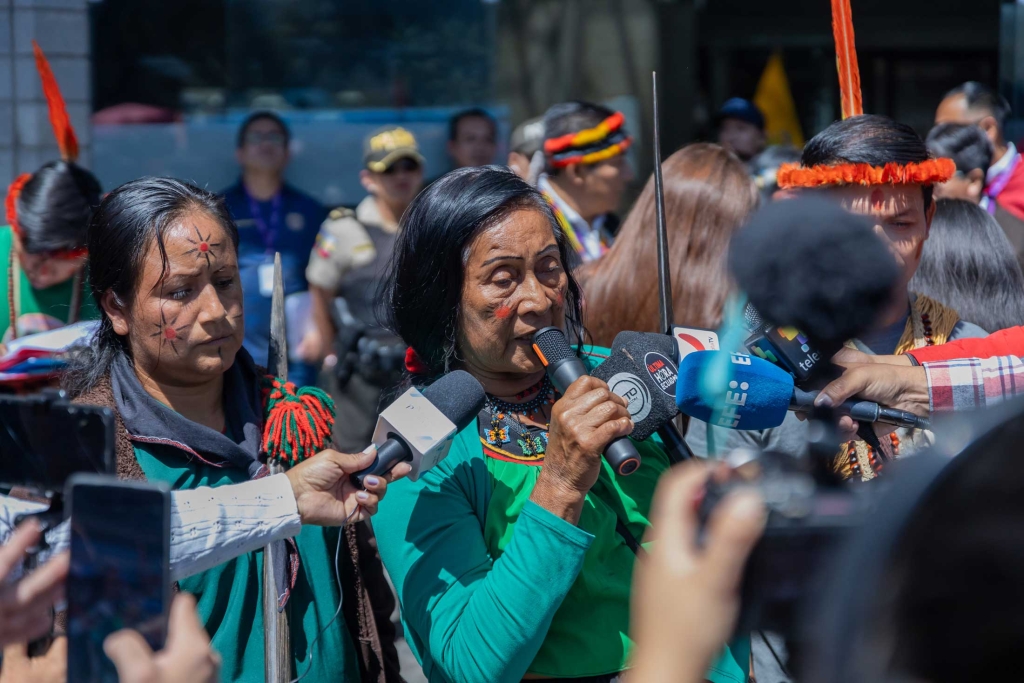
A’i Cofán elder Graciela Quenama speaks to the media in her language, A’ingae, about the teachings she shares with the children of the A’i Cofán community of Sinangoe:
“Our children are already weaving baskets. They are practicing our traditions. We do this so they do not lose their way or forget our culture and identity. We want to keep recovering all that our elders have taught us.”
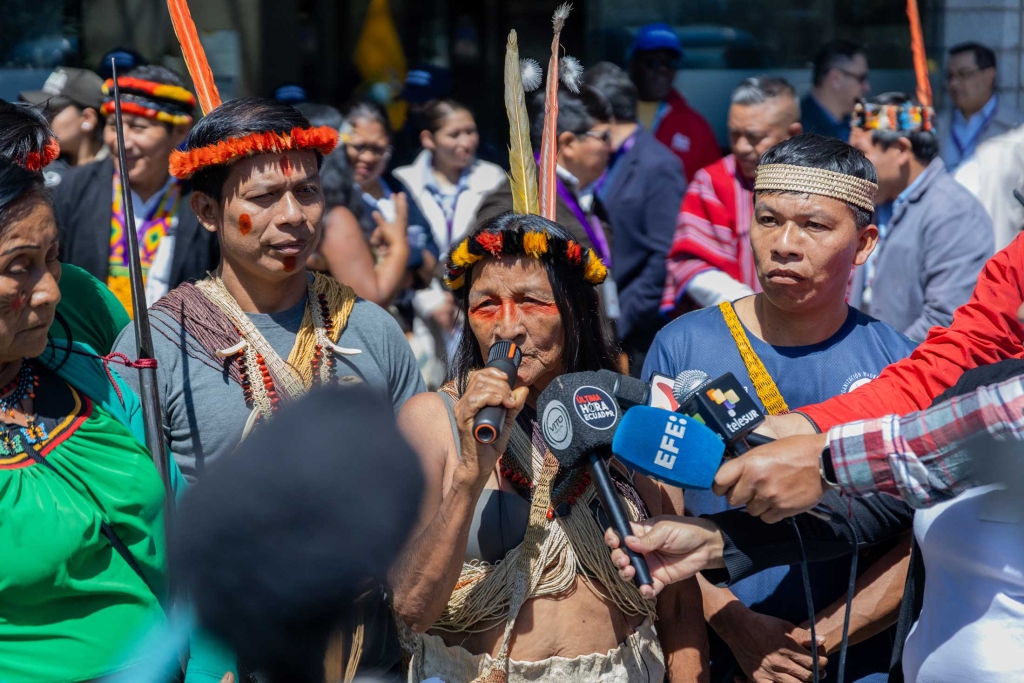
Waorani elder and pikenani Omanca Enqueri spoke in Wao Tededo to demand that the Ministry of Education register the Community Educational Project, reaffirming the importance of an education rooted in her people’s autonomy and self determination:
“I am here with my grandchildren and my children. We have come from far away, from our rainforest territory, so they will hear us and register our projects. Our own education model is very important, and it must be respected.”
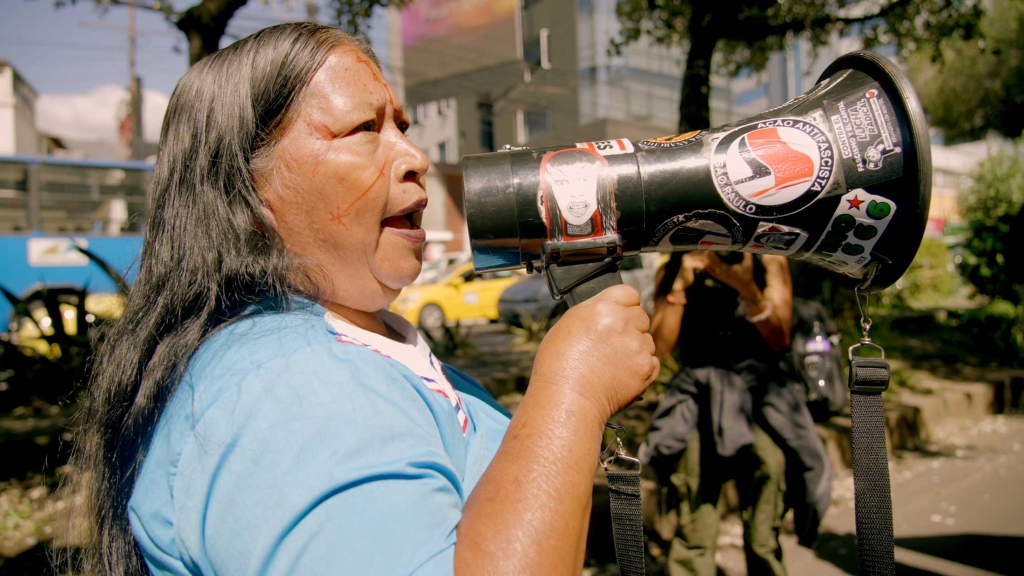
Mireya Piaguaje, an elder of the Siekopai Nation, sang in Paikoka as she marched toward the Ministry of Education. There, she proudly told the media about the work her people have been carrying out
“with the guidance of our elders, youth, and leaders, so that our own education can ensure our autonomy, strengthen our identity, and sustain our culture so we do not disappear.”
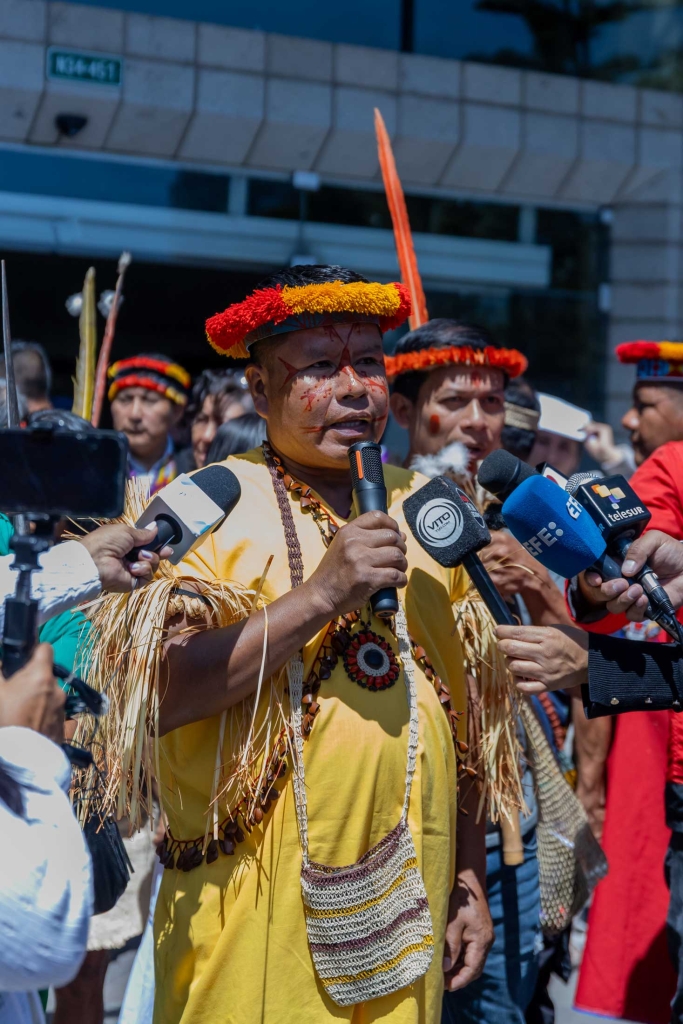
“Our territory, our knowledge, our connection to other worlds — that is what matters most. We are deeply concerned to see ancestral knowledge fading among children and even teachers. Under the Ministry of Education’s model, our elders are not allowed to take part in teaching. We believe our wise men and women must be part of education and the transmission of knowledge — not only lessons in reading, writing, and arithmetic.”
Wilmer Piaguaje, Education Leader of the Siekopai Nation
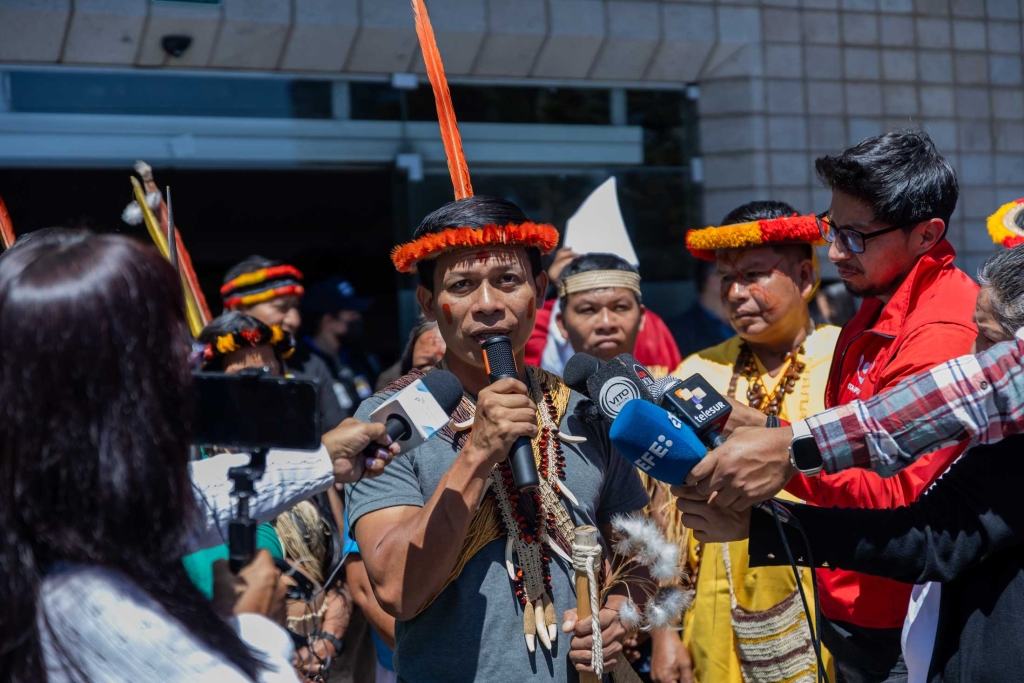
“We have come here to open a coordinated dialogue with the Ministry of Education. Our education system was built within our communities, guided by the wisdom of our elders, and the results have been very positive. We have launched six pilot schools and are already seeing change in our children, because this model grows from the roots — from the forest itself. Outsiders have always come to impose their systems. We are decolonizing education, and it is through education that self-governance begins.”
Oswando Nenquimo, President of the Waorani Organization of Pastaza
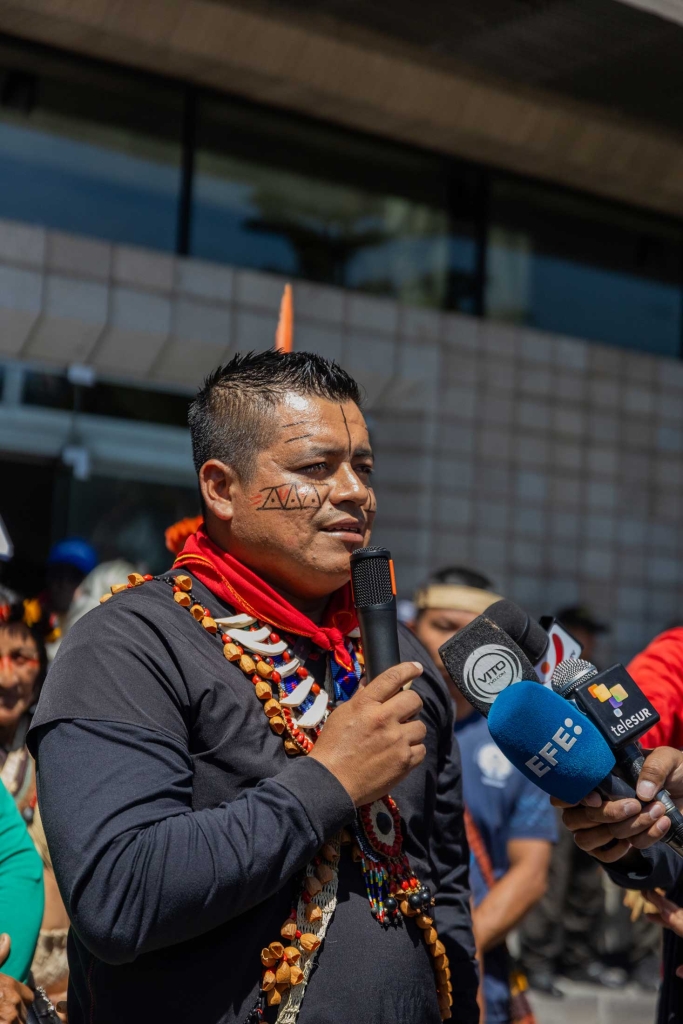
“Teaching is not confined to four classroom walls, as the Ministry defines it. It means learning through the territory itself. Every space, every corner of our land is a place to learn and to practice our own knowledge — knowledge that is at risk of being lost. The methods and ways of teaching passed down by our elders are already showing results.”
Wider Guaramag, President of the A’i Cofán Community of Sinangoe
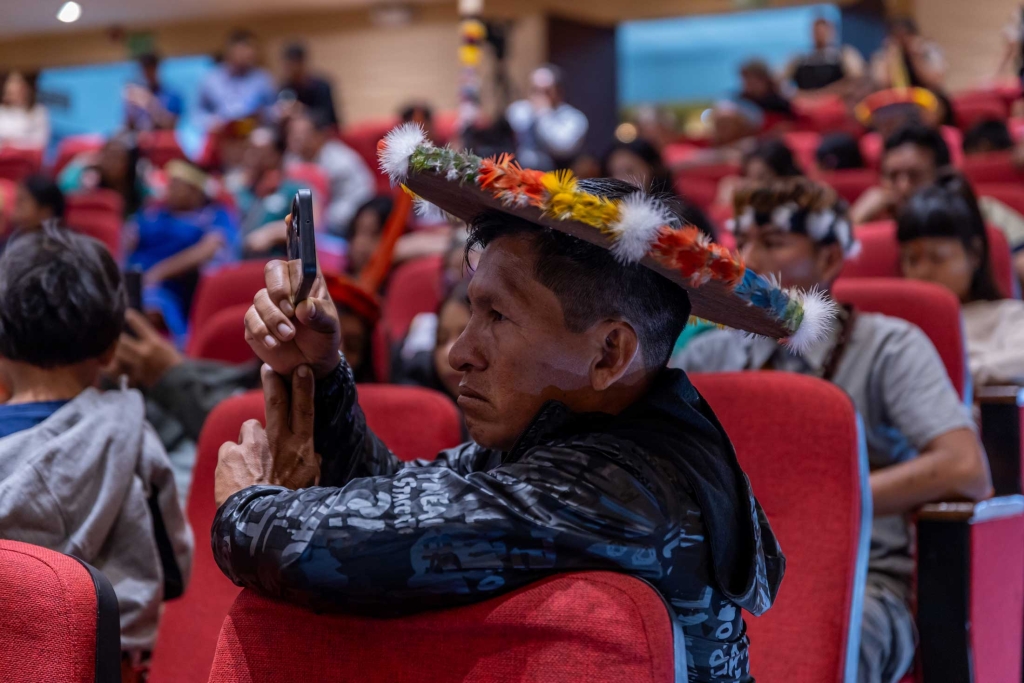
At the end of the march, the proposals were formally received by the Secretariat of Intercultural Bilingual Education and Ethnoeducation (SEIBE), the Vice Ministry of Education, and the General Subsecretariat of Ecuador’s Vice Presidency. The institutions agreed to begin the official registration process for the Community Educational Projects (PEC) within one month — in February 2026 — once technical teams are formed to carry out the evaluation.
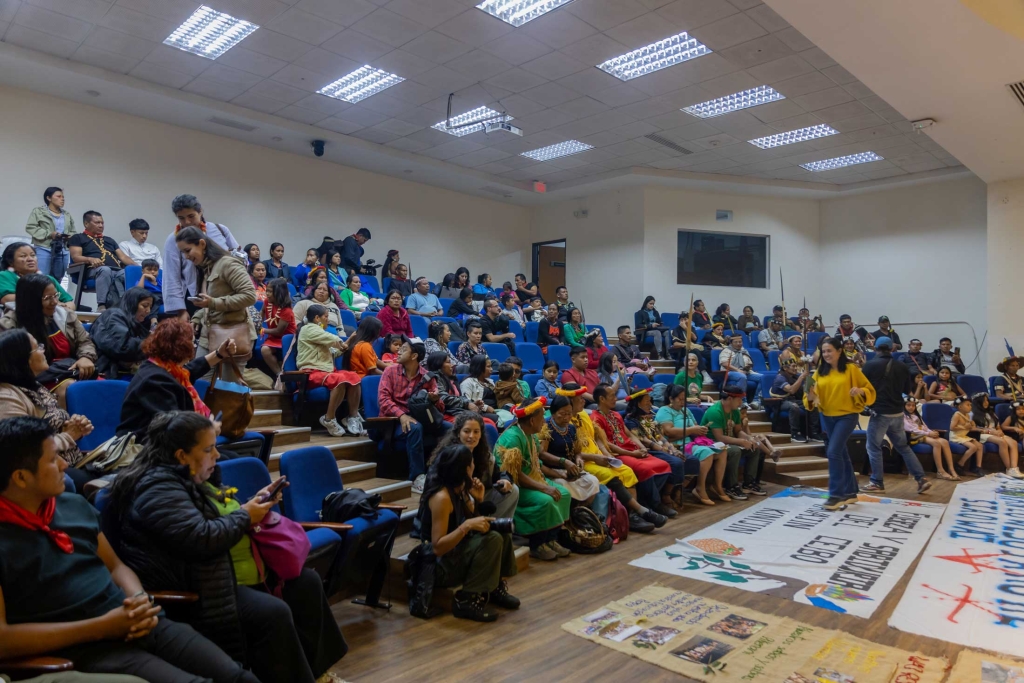
At the Latin American Faculty of Social Sciences (FLACSO), the Indigenous delegations took part in a public discussion that brought community-led education into an academic space. They offered a hands-on presentation of weaving, fishing nets, ceramics, medicinal plants, and the many forms of knowledge already being learned through their community-based education systems.
Amazon Frontlines is proud to support these processes and to work in partnership with the Waorani, A’i Cofán, and Siekopai nations, alongside Ceibo Alliance, in strengthening education systems that are vital for Indigenous autonomy, the future of the Amazon, and the global climate.