
Water as a sacred space: Illustrated stories from the Amazon
Illustration Shen Aguinda
In the Amazonian Indigenous cosmovision, water is more than a river, a lagoon, or a stream. It is a place where spiritual beings, like guardians and mermaids, line. Where fish are planted; where a woman who transformed into an anaconda resides; it is a place visited by elders and wise people through medicine.
Indigenous leaders, both women and men alike, from the Siona, Siekopai, A’i Cofán, and Waorani nationalities of the Ecuadorian Amazon, share stories they learned from their grandparents about their relationship with water.
Illustrator Shen Aguinda (A’i Cofán) interpreted these stories through drawings to commemorate World Water Day.
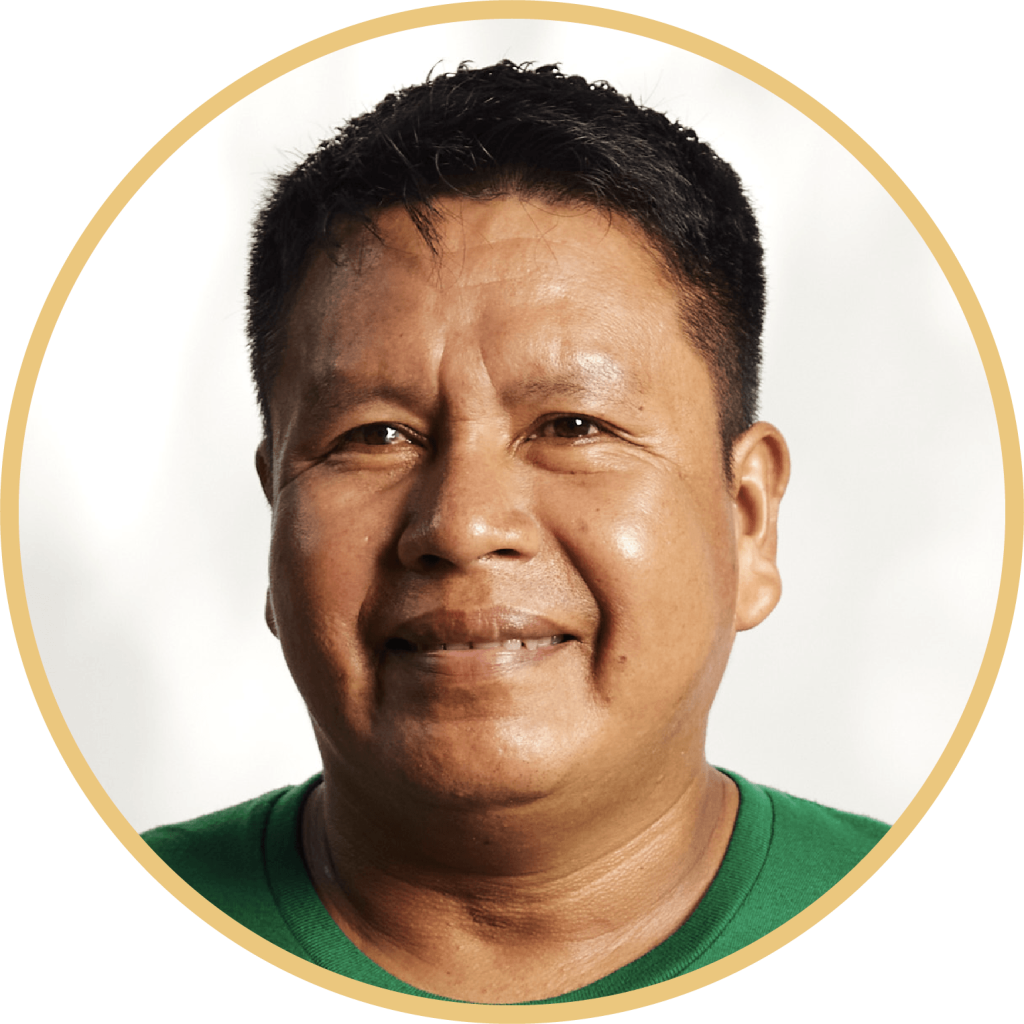
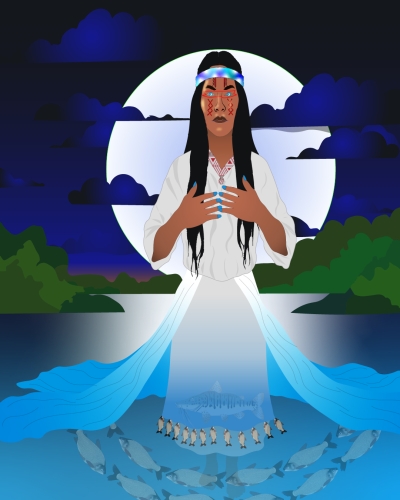
Wilmer Piaguaje, Siekopai, remembers Okome and Waisa ’same Nomio, owners of the water, who sow the fish in the rivers.
Transcription
Waisa’same Nomio, the woman, and Okome, the man, are the owners of the water; they control the seasons and sow fish in all the rivers..
The husband guides the fish during the rising waters in August. The woman accompanies them when the rains arrive: March, April, May, and June. These are the times when the fish spawn. They call it “sowing maize.” We say they spawn—meaning they lay their eggs—but for them, it is not that; for them, it is sowing maize..
They are not large beings like us; they are small. The woman has long hair and ornaments on her arms; she carries small, very fragrant plants. In Paikoka, this is a seû. The man is also small. Both dress in white and do not paint themselves with achiote..
Waisa’same Nomio has little fish hanging from the edges of her skirt as ornaments. On his necklaces, Okome has tiny fish. I know all of this because my grandmother and my grandfather told us these stories during the nights of yagé ceremonies. We would ask them questions. It was something very beautiful..
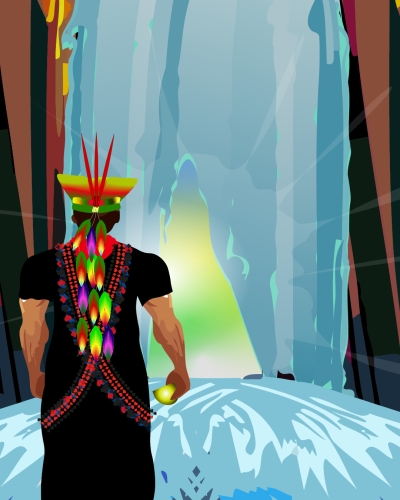
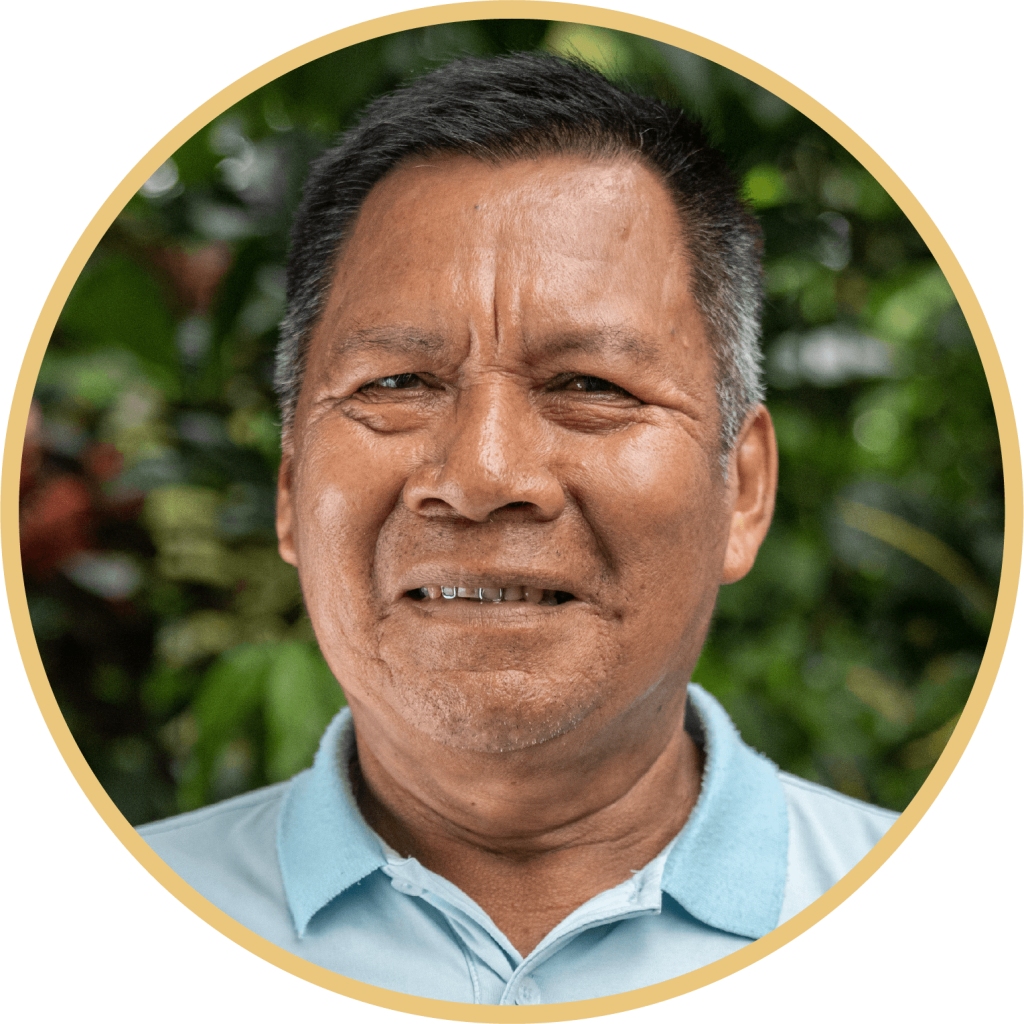
Emergildo Criollo, A’i Cofán nos cuenta cómo el agua puede abrirse como una casa donde los chamanes encuentran boas y sirenas.
Transcription
Shamans are experts at entering the water because, for them, the water is not water—it is a house.
When they take yagé, they don’t see water; they see a door to enter because inside they find the boas and the sirens.
They, the sirens, have no men; they are only women. They want nothing to do with human women who walk near the creek where they live when they have their period. If the siren manages to catch the scent of one of them, she will pursue her until she kills her. They also hunt women carrying newborn babies. The siren arrives suddenly and grabs her victim by the neck, breaks it, and they die right then and there! Just like that, in a heartbeat.
The boa is also not a boa to the shamans. We cannot see where they live; we think they live on the land and go from there to the water, but the shamans say they are actually beings of the water. Some boas are shamans. There are good shaman-boas and bad ones.
It is said that the bad shaman-boa sets its trap near where animals and people pass, so they get entangled and then get dragged into the river. If a Cofán is not a shaman, they die as soon as they enter the water. That is why the boas wrap around them and drag them by sheer strength into the water, as if they were swallowing them.
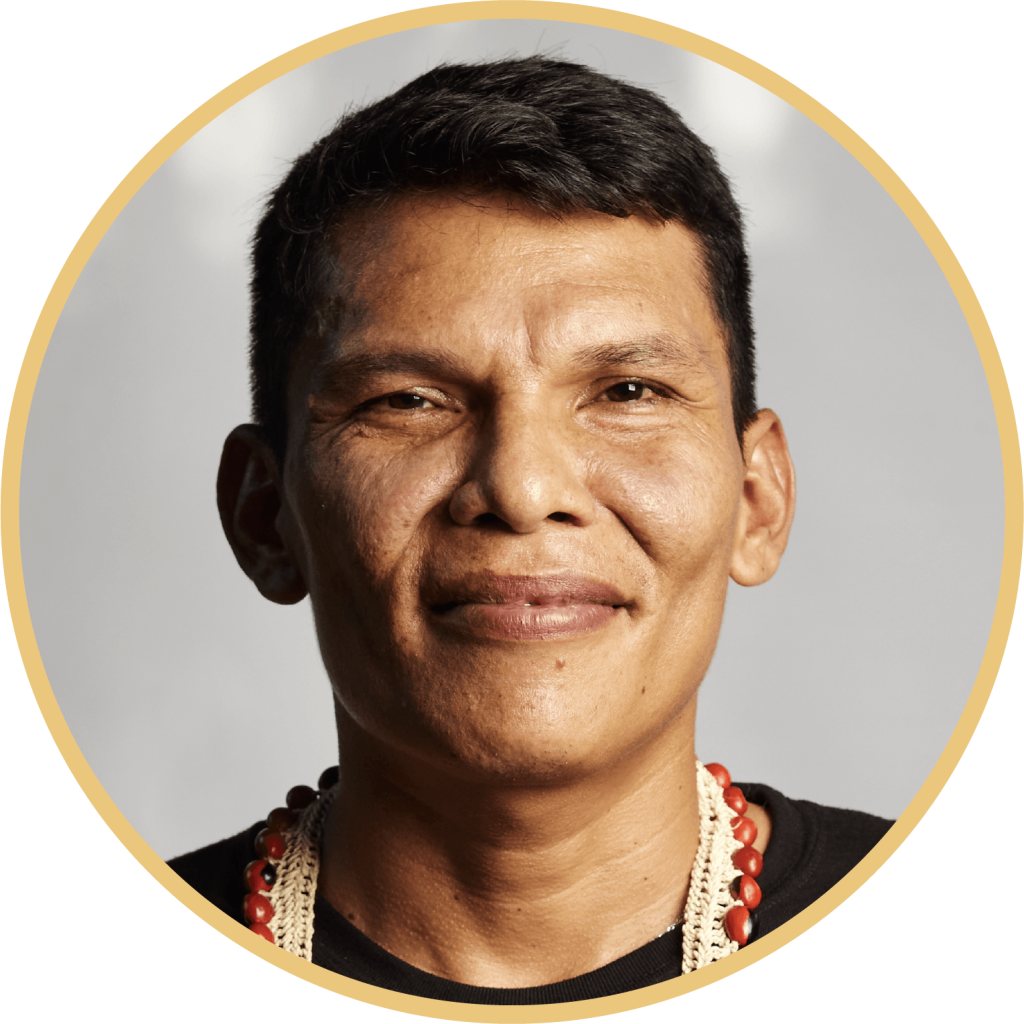
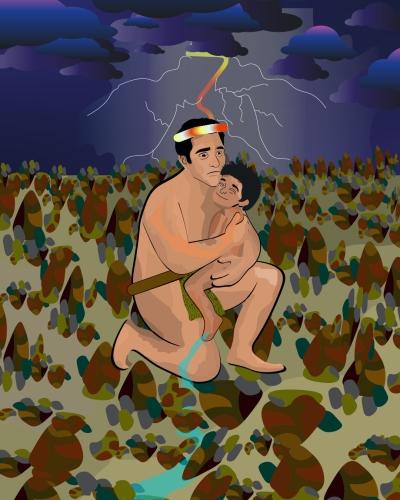
Jairo Irumenga, Waorani, remembers the story of the son of the sun and how nature punished him with thunder and lightning.
Transcription
The Waorani say that sometimes nature grows angry when the son of the sun arrives, because once a grandfather took the life of his own grandson.
It all happened in the jungle, on a day like any other. The little boy loved to play, but his grandparents took him to the chacra and began felling the trees. The boy wouldn’t help them; he only wanted to play. Then, the grandfather grew very angry and killed him!
The next day, he returned to the chacra and realized what he had done. He was filled with regret; if he hadn’t killed his grandson, the boy would be there, helping him. Suddenly, he heard a child playing on a nearby beach. He peeked from a hiding place and saw the boy on the shore, walking back and forth, throwing stones and shouting.
Suddenly, the grandfather realized: “That is my grandson. I have to get my grandson back!” He approached, trying to stay hidden the whole time; he crept closer and closer, until he grabbed him! It was his grandson, the very one he himself had killed the day before. At the exact moment he caught him, nature responded with thunder and lightning, and the grandfather began to scream: “No, Waengongi (god), do not destroy me, I am recovering my grandson! I am not killing anyone, I am recovering my grandson!”
Despite his cries, it rained hard, so very hard. The Waorani say it rained so much that the water put out all the fires that lit and warmed their homes. The punishment for the death of that child was to extinguish all fire with water.
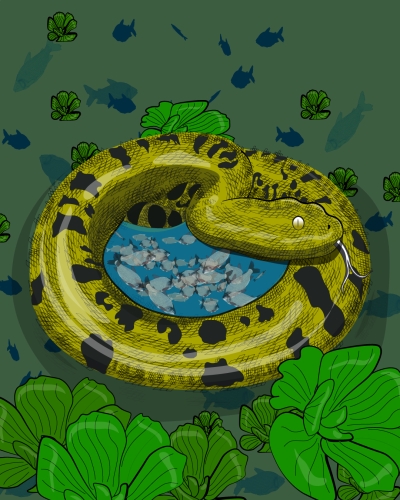
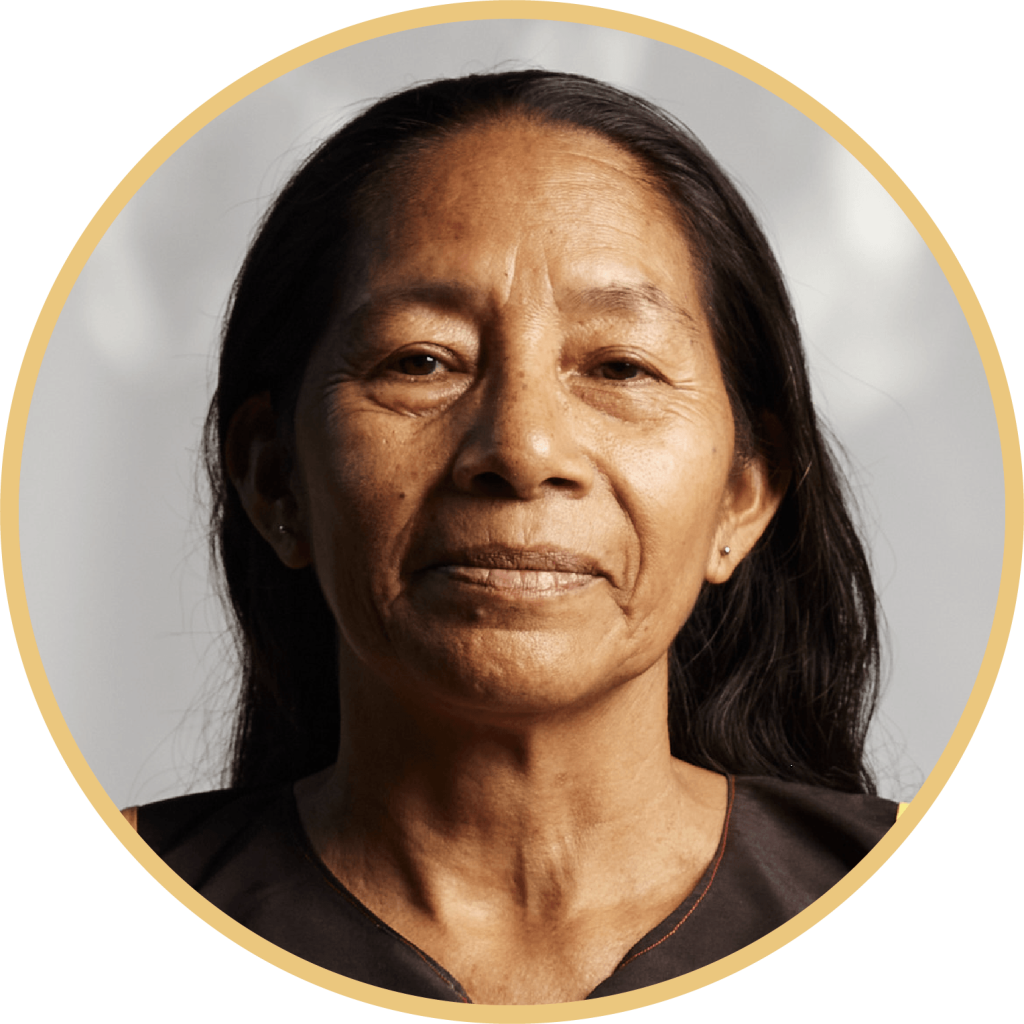
Alicia Salazar, Siona, tells us about the anaconda, the mother of the fish that inhabit the river.
Transcription
Inside the rivers, there are spirits that cannot be seen with the naked eye, but we can see them when we take the sacred plant. They reveal themselves to us through dreams and through our spirituality. Our wise ones would transform into anacondas and set out to travel along the river during their ceremonies, wouldn’t they? The anaconda is like the mother who watches over all the food, the fish.
Now, with everything we are going through—all this climate change—these spirits are leaving; they are disappearing. And our rivers, well, they are drying up because of all the pollution and all the noise. They also need to be in a place of tranquillity. It is not just water, rivers, and lakes; there are many spirits there who help us in our daily lives, in the way Indigenous peoples live together within their territories.
Credits
Text and interviews: Michelle Gachet
Editing: Erika Castillo, Omar T. Bobadilla
Illustrations: Shen Aguinda
Photos: Ezequiel Mojo, Michelle Gachet, William Kano
Web Design: Mónica Aranda
Translation: Alejandra Pérez