Listening to the Amazon rainforest, with Wiña
By Jane Fonda
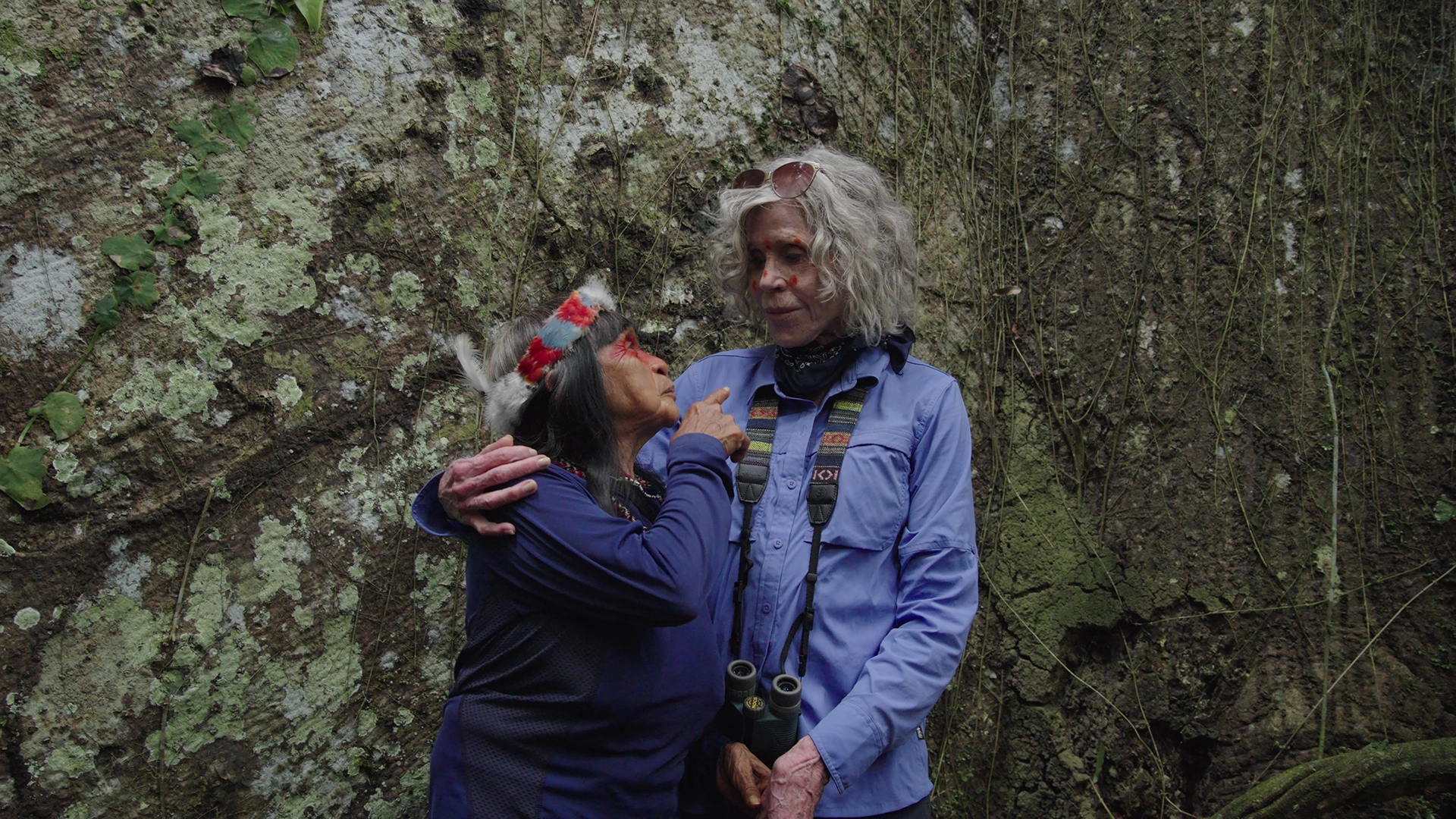
I’d never been in a rainforest before, but after reading the book, We Will Be Jaguars by Nemonte Nenquimo—an Indigenous woman leader of the forest-dwelling Waorani Nation in Ecuador—I asked her to invite me. I wanted to experience the Amazon and learn how I can help protect it.
I learned that the forests are not “a land with no people, for a people with no land,” as the Ecuadorian government claims. They’ve been home to Indigenous peoples, the forest guardians, for millennia.
What I did not anticipate was that on my first canoe trip down the Napo River into the Amazon rainforest, Nemonte sat me next to an elderly Waorani woman named Wiña. She was tiny and very quiet, but her eyes sparkled with curiosity and humor, so I took her hand. As she seemed pleased by my gesture of friendship, I asked if she spoke Spanish. A translator explained that Wiña spoke only Wao Tededo, her oral ancestral language. Wiña explained that too many Indigenous nations have lost their language, and so the Ceibo Alliance, the Indigenous organization that she is a part of, is training teachers in Wao Tededo. “If we lose our language, we lose our strength, our power. It is our identity,” shared Wiña.
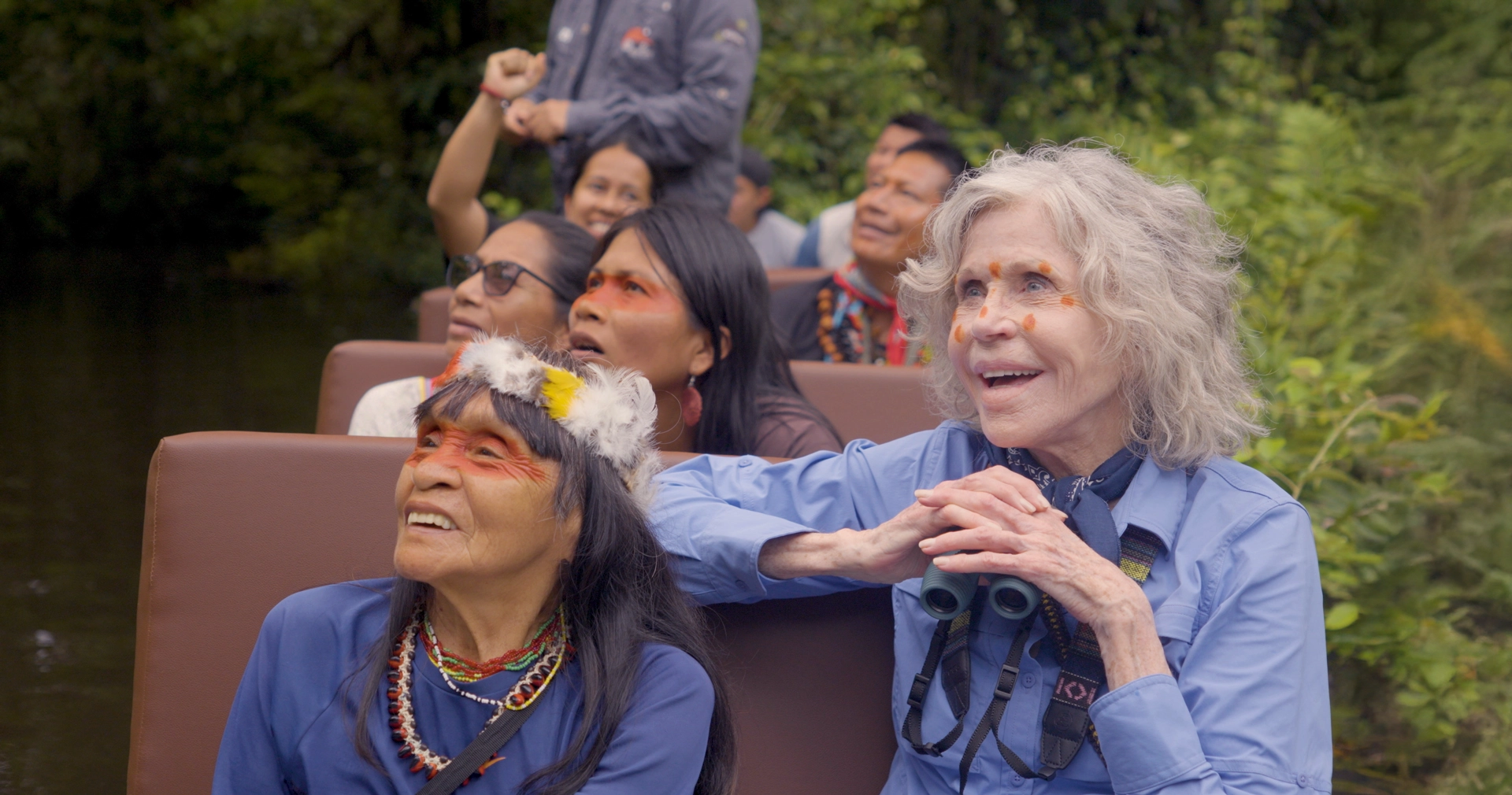
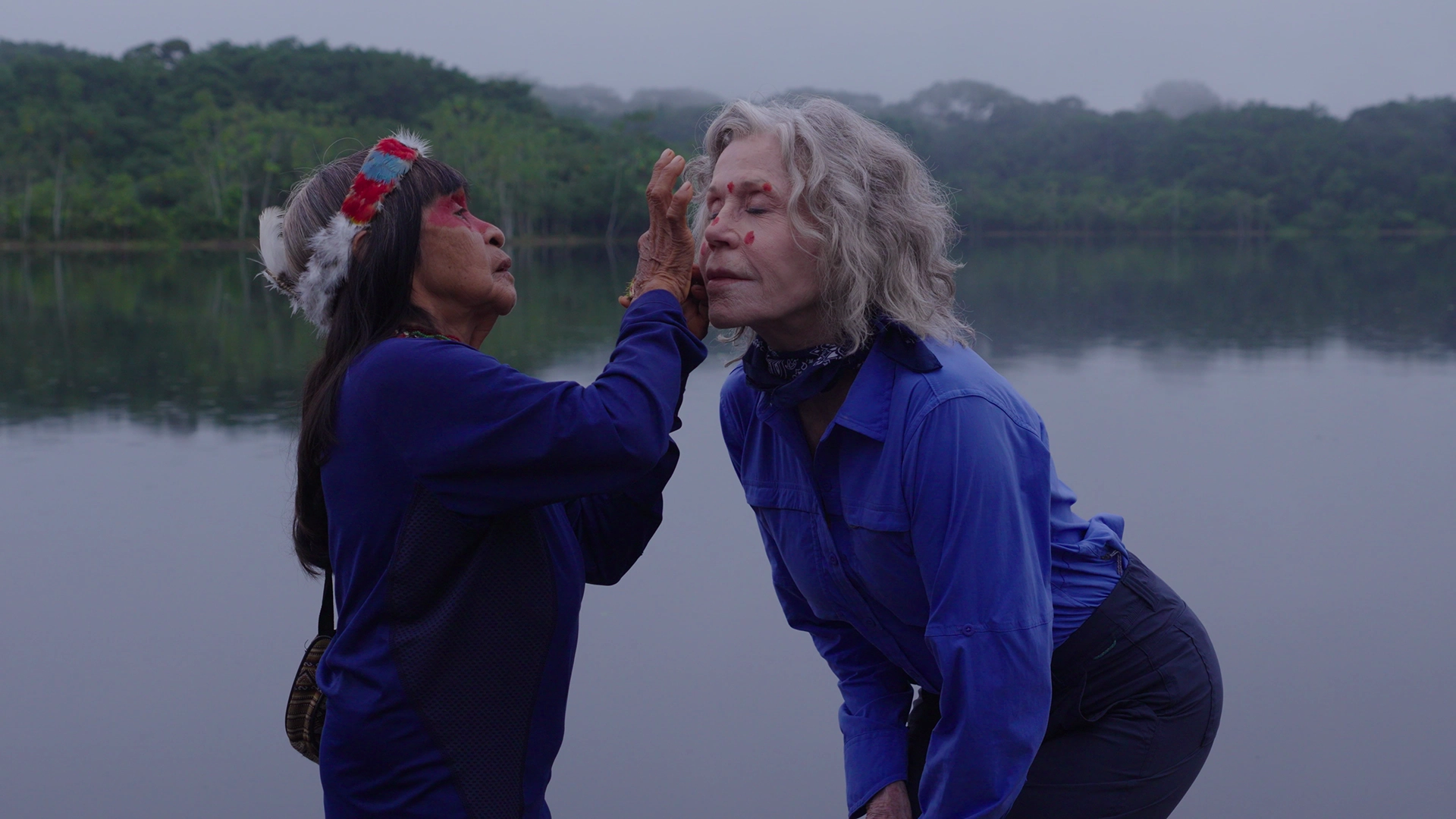
I felt a bond with this tiny woman who, Nemonte guesses, is my age, 88. When we arrived at where we would spend the night and disembarked, Wiña ground the red seeds of a fruit between her fingers and painted dots all over my face, as if to initiate me into her world.
I was with Wiña for three days as we moved deeper into the rainforest. I could feel her focused attention on her surroundings. She was listening to the trees, the plants, the water. At one point, she asked (via the interpreter) if I could hear the Howler monkeys. All I heard was a slight breeze. Turns out, that’s the monkeys.
She showed me a vine that cures toothache; a leaf that reduces fevers; and another one to reduce inflammation; she saw and heard everything, even a tiny (and dangerous) frog hidden beneath the fallen leaves on the edge of the trail – a frog so poisonous, according to Wiña, that it contained enough poison to “kill all of us!”
Walking in the forest, Wiña sang a repetitive, high-frequency chant unlike anything I’ve ever heard. The forest became a high-vaulted cathedral, complete with slanted beams of light. She knew where the macaws go to drink; where the parakeets go for salt; where the anaconda dwells, and what plants are poisonous…and a whole lot more.
Her close-knit community lives in interdependence not only with the tangible, natural world that provides all their needs, but also with the unseen, the spirits of the forest, Onawoka and their ancestors who guide them in their dreams.
Here I am, I thought, with people living seamlessly with the natural world, their source of life. But my country and hers view their life source as a ‘resource’ to mine, drill, and cut down for monocrops and cattle.
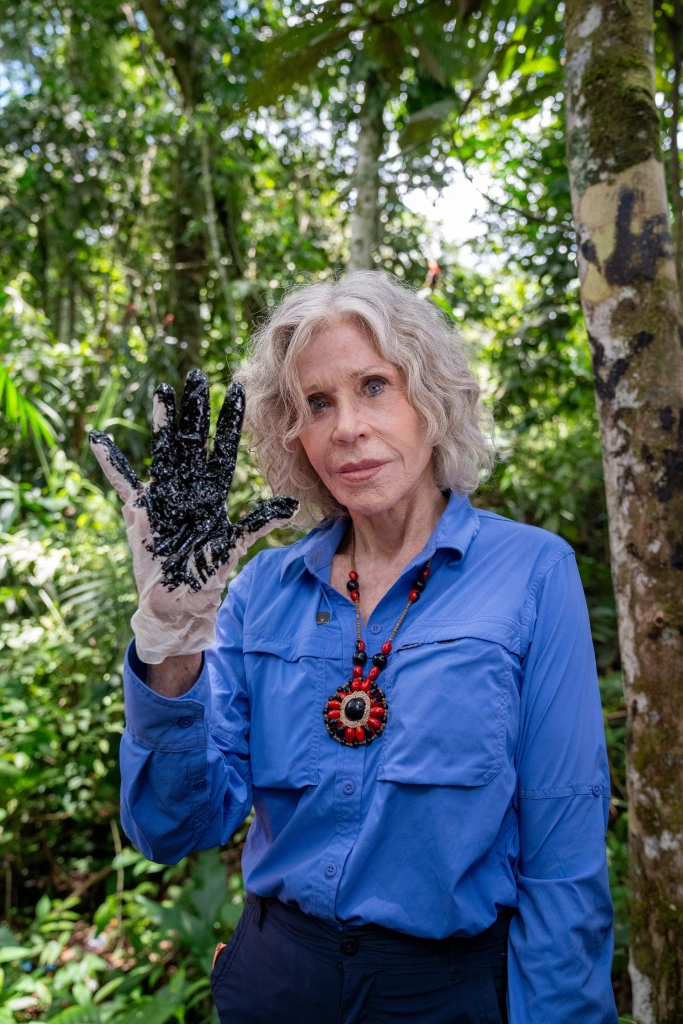
Now, it’s the Ecuadorian government that wants to auction off 8.7 million acres of ancient rainforest in the south-central part of Ecuador. The seven Indigenous nations whose ancestral land it is demand “free, prior and informed consent” before their land is ravaged. Wiña and the Waorani want to help stop it.
I can see the determination on Wiña’s face, and I feel it too. Too many children have died from oil pollution. Too much cancer. Undrinkable water. Animals dying. Climate worsening.
When the time came to say goodbye, it hit me: we’re two brave, old grandmothers from two diametrically opposed cultures, but we share the same fight.